

Some living rooms feel peaceful the moment you walk in — soft edges, simple tones, and harmony in every corner. That’s the magic of monochrome décor. When done right, this style isn’t sterile or boring. It’s warm, serene, layered, and thoughtfully curated.
Whether your palette is creamy beige, warm gray, soft taupe, or classic black-and-white, the goal is balance. You’re creating mood, flow, and comfort — not a showroom.
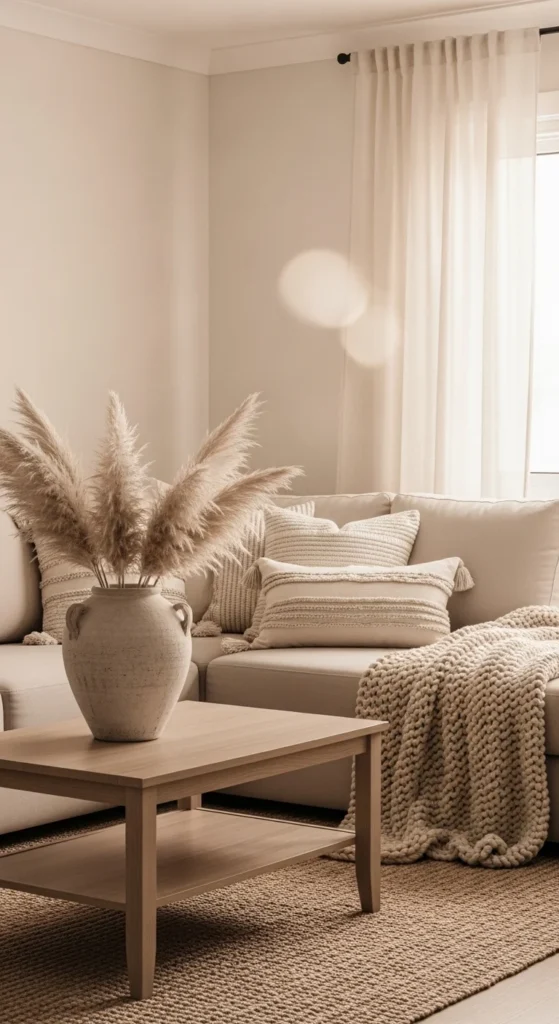
Let’s build a living room that feels effortless, calming, and beautifully cohesive.
Choose a Soft Tint and Commit
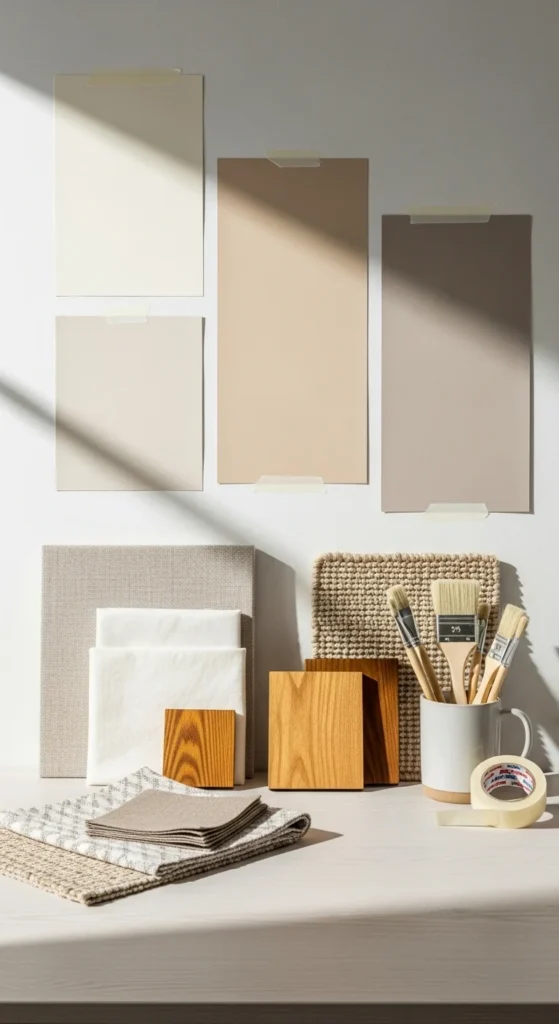
Your base tone sets the mood, so choose a hue and stick to it. Beige, ivory, greige, charcoal, or sand all work beautifully. Monochrome thrives in consistency, so repeat that base throughout your space.
Pro tips:
- Pick one tone family and repeat it everywhere.
- Keep undertones consistent — warm with warm, cool with cool.
- Use paint, upholstery, and even décor with shared hues.
Even if every item isn’t exactly the same shade, similar undertones will make the room feel unified and intentional.
Layer Textures for Warmth
A monochrome palette shines through texture. Since color is subtle, texture becomes your visual interest tool.
Think soft, cozy, and natural.
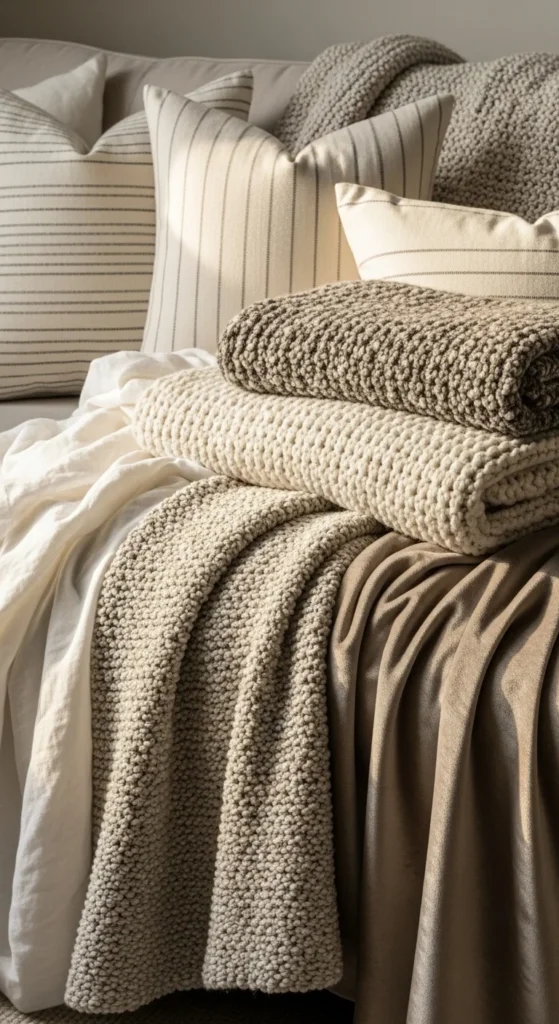
Try mixing:
- Linen cushions for softness
- A chunky knit throw
- Woven baskets
- A jute rug layered with a plush one
- Ceramic vases and matte finishes
The key is touchable surfaces. If you walked into the room barefoot, would it feel inviting? That’s the goal.
Bring Depth with Subtle Shade Variations
Monochrome doesn’t mean “one shade only.” Use a gradient effect — light to medium to rich tones — to create dimension.
For example:
- Cream sofa
- Toasted beige pillows
- Warm sand curtains
- Light oak accents
This keeps the space from looking flat.
Budget idea: Thrift plain pieces and spray-paint vases, trays, or picture frames in matching neutral tones.
Balance Shapes and Silhouettes
Shape matters when your color palette is quiet. Use contrast in form, not color.
Mix silhouettes like:
- Round ottomans + square tables
- Oversized vases + small sculptural pieces
- Curved sofas + linear bookshelves
This creates visual rhythm, which feels relaxing but elevated.
Add Natural Elements
Nature softens monochrome rooms instantly. Bring in warmth through:
- Wood furniture or trays
- Stone or ceramic planters
- Dried pampas or olive branches
- Woven baskets or cane chairs
Plants don’t have to be bright green. Opt for sage, olive, or dried stems for subtlety.
Use Light to Build Atmosphere
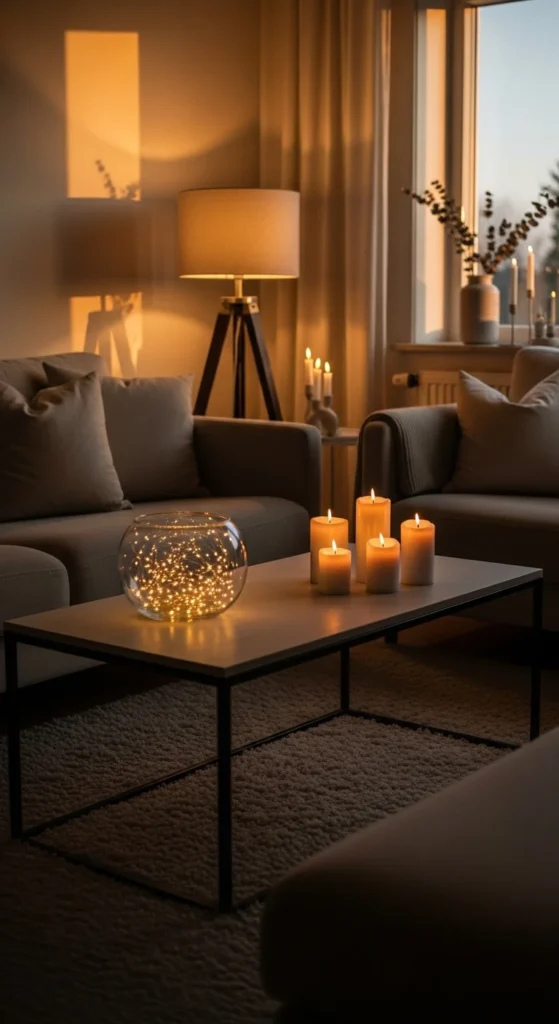
Monochrome thrives with soft lighting. Harsh light breaks the mood.
Aim for warm and layered light.
- Floor lamps with soft fabric shades
- Candles and lanterns
- Wall sconces
- Diffused window light
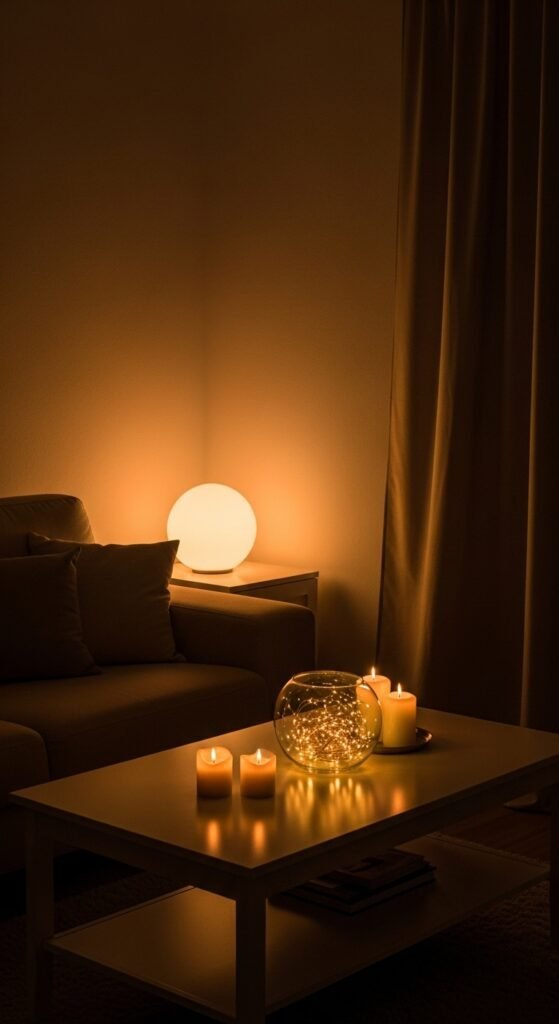
Lighting should feel gentle and calm — like a cozy evening retreat.
Incorporate Simple Statement Art
Even a single monochrome art piece can anchor the space — think minimalist prints, textured canvases, or line art.
Tips:
- Choose neutral frames
- Lean frames on console tables for layered depth
- DIY textured art using spackle + canvas for a luxe look under $20
This gives personality without interrupting the palette.
Keep Surfaces Clean and Edited
Monochrome design thrives on breathing room.
A clutter-free space feels intentional and peaceful.
Try:
- 1–2 statement pieces per table
- Baskets for hidden storage
- Trays to organize small décor
Less noise = more calm.
Final Styling Touches
Add warmth through finishing details:
- Neutral throw blankets (layer two!)
- Book stacks in tone-on-tone covers
- Ceramic bowls + natural beads
- Matte candles
- Neutral pottery clusters
Small touches, repeated tones — effortless calm.
Leave a Reply