

Choosing an area rug isn’t just about color or pattern—it’s about size. The wrong rug can make a room feel awkward, unbalanced, or even smaller than it really is. But the right rug? It grounds the space, anchors your furniture, and instantly makes the room feel polished and intentional.
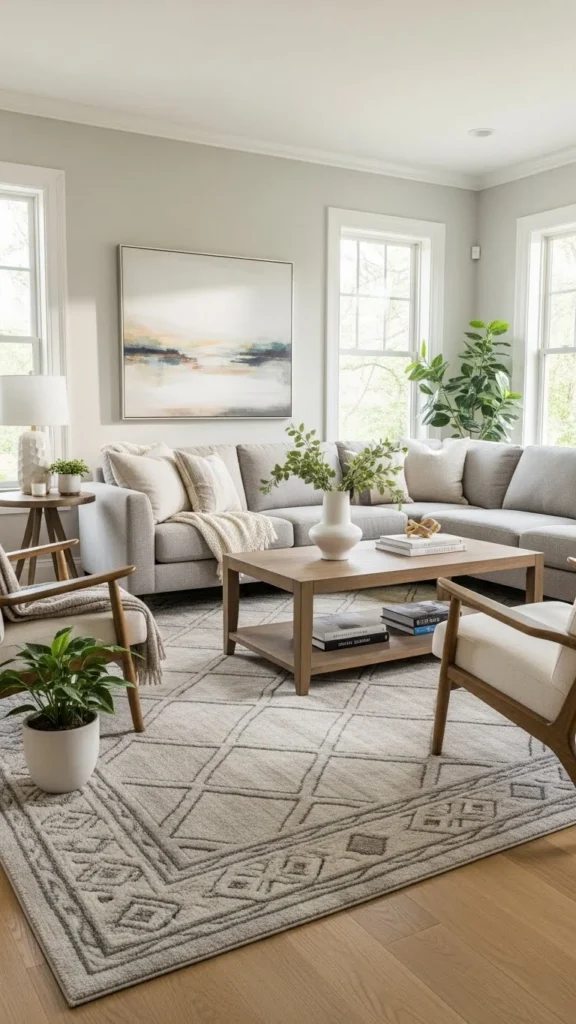
If you’ve ever wondered why your room still feels “off” even though your décor is on point… the rug size might be the answer.
Let’s break down how to choose the perfect rug size for every room.
Understand the Purpose of the Rug: It Should Anchor, Not Float
A rug’s main job is to ground your furniture—not sit like a tiny island in the middle of the room. This means your rug should connect major pieces together instead of leaving them scattered.
Your rug should:
- Define the seating or dining area
- Balance the furniture visually
- Make the room feel cohesive
- Add warmth and texture
A rug that’s too small often makes the room feel disconnected. Bigger is usually better—and far more stylish.
Follow the Golden Rule: At Least Front Legs on the Rug
Interior designers use one easy rule across most spaces: the front legs of your furniture should sit on the rug.
This applies to:
- Sofas
- Chairs
- Accent stools
- Coffee tables
Even partially grounding the furniture creates visual unity.
However, if your room is large enough, a rug that fits fully under all furniture feels even more luxurious and intentional.
Choosing the Right Rug Size for Living Rooms
Living rooms are where rug sizing mistakes happen most often. People tend to choose rugs that are too small because large ones feel intimidating—but a small rug can throw off the entire room.
Best rug sizes for living rooms:
- 8×10 for medium rooms
- 9×12 for larger rooms
- 10×14 for open-concept spaces
If your sofa is over 84 inches long, an 8×10 is the bare minimum.
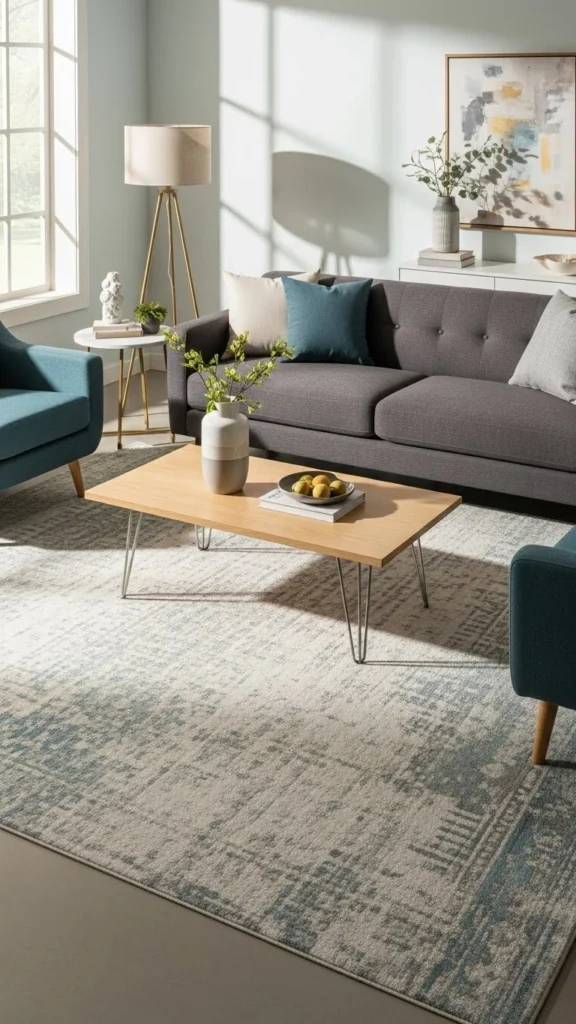
Avoid:
- Rugs that end before the sofa legs
- Tiny rugs centered beneath the coffee table only
- Rugs that leave large empty gaps around the furniture
Your rug should act like a visual container for the entire seating setup.
Choosing the Right Rug Size for Dining Rooms
Dining room rugs have one non-negotiable rule: all chairs should stay on the rug—even when pulled out.
This prevents wobbling, protects floors, and looks balanced.
Common rug sizes for dining rooms:
- 8×10 for 6-seat tables
- 9×12 for 8-seat tables
To measure correctly:
- Add 36 inches around all sides of the table.
- Make sure chair legs stay on the rug during use.
Rugs that are too small in dining rooms instantly disrupt the room’s flow.
Choosing the Right Rug Size for Bedrooms
Bedroom rugs should soften the room and create warmth when you get out of bed.
Ideal bedroom rug layouts:
- 9×12 for king beds
- 8×10 for queen beds
- 6×9 for full beds
The rug should span horizontally under the bed and extend past the sides.
If you prefer smaller rugs, use two runners—one on each side—to balance the space.
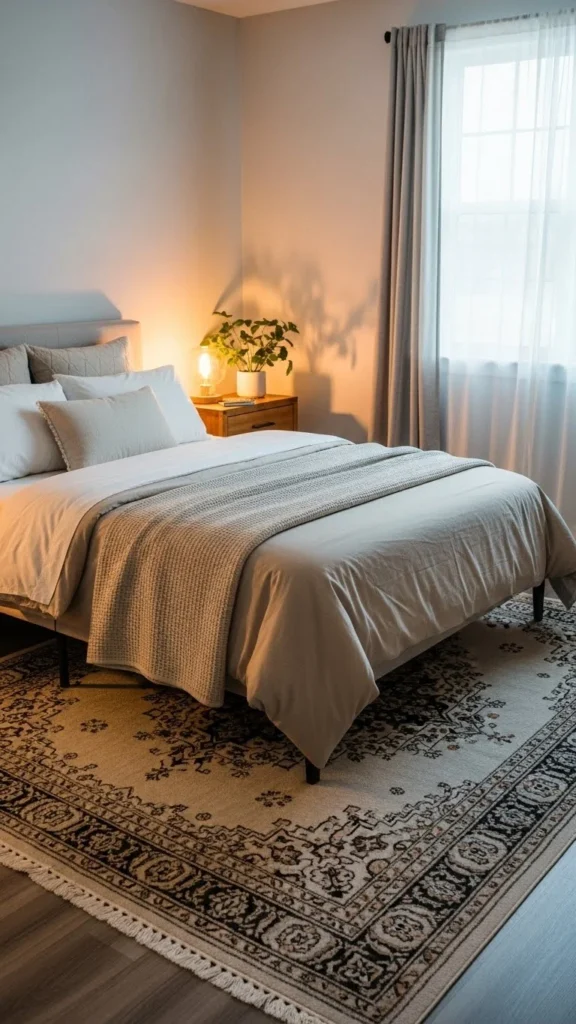
Avoid placing tiny rugs at the foot of the bed—they rarely look intentional.
Consider Room Shape When Choosing Your Rug
A rug should mimic the shape of the room for maximum harmony.
For long rooms:
- Choose rectangular rugs that run the length
For square rooms:
- Choose square rugs or large rectangular ones
For round tables:
- Consider round rugs that mirror the furniture shape
Matching shapes creates visual balance and makes the room feel more structured.
Leave the Right Amount of Space Around the Rug
A perfectly sized rug still needs breathing room.
Follow these spacing guidelines:
- Leave 12–18 inches of bare floor around the rug in most rooms
- For small rooms, 8 inches is acceptable
- Avoid wall-to-wall rug coverage (unless it’s a true carpet installation)
This border makes the space feel intentional, not cramped.
Layer Rugs for Flexibility & Style
If you already own a rug that you love but it’s too small, consider rug layering.
Tips for layering:
- Place a large neutral jute or sisal rug underneath
- Layer your smaller patterned rug on top
- Center the top rug for an anchored look
This adds texture, depth, and style—plus it saves you from buying a new oversized rug.
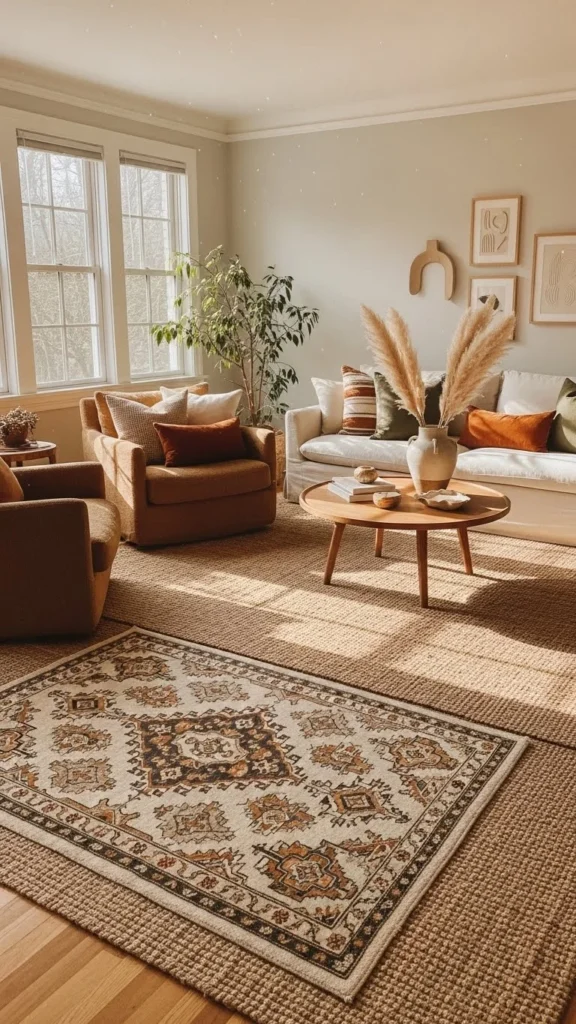
Layering is also perfect for renters who want more personality without permanent changes.
Final Takeaway
The right rug size can transform a room—making it feel grounded, cohesive, and well-designed. When in doubt, always size up, anchor your furniture, and follow spacing and layout guidelines that support the room’s flow.
Save this guide for later and start choosing rugs that truly elevate your space!
Leave a Reply