

Plants do more than decorate a room—they bring movement, freshness, and a sense of calm that makes any home feel warm and lived-in. But styling plants isn’t just about placing a random pot on a shelf. When done intentionally, plants can transform your home into a lush, vibrant space that feels thoughtfully designed.
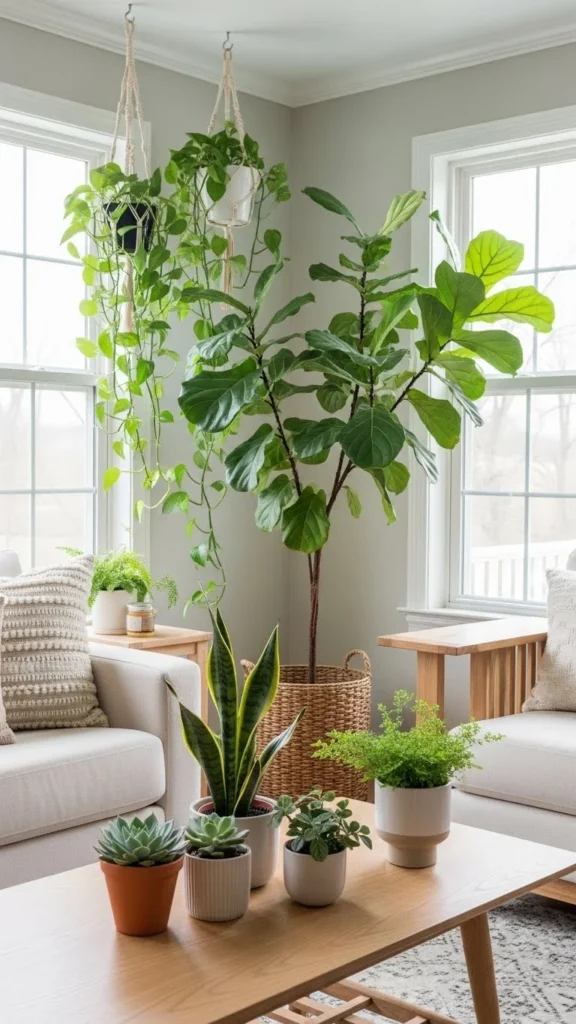
Let’s explore how to style plants in ways that look purposeful, balanced, and beautifully alive.
Start by Choosing Plants That Fit Your Lifestyle
Before buying plants based on aesthetics alone, think about how much care you’re willing to give them.
Low-maintenance options:
- Snake plant
- ZZ plant
- Pothos
- Monstera
- Philodendron
Higher-maintenance options:
- Fiddle leaf fig
- Ferns
- Calatheas
- Orchids
Choose plants you can realistically keep alive. A thriving plant looks intentional—while a struggling one can ruin even the prettiest décor setup.
Use Plants to Fill Empty Corners & Awkward Spaces
Plants are perfect for corners that feel bare or unbalanced.
Great corner options:
- Tall floor plants like a fiddle leaf fig or bird of paradise
- Medium plants on stands
- Cascading plants in hanging planters
Plants soften sharp corners and add height, making the room feel more dynamic and complete.
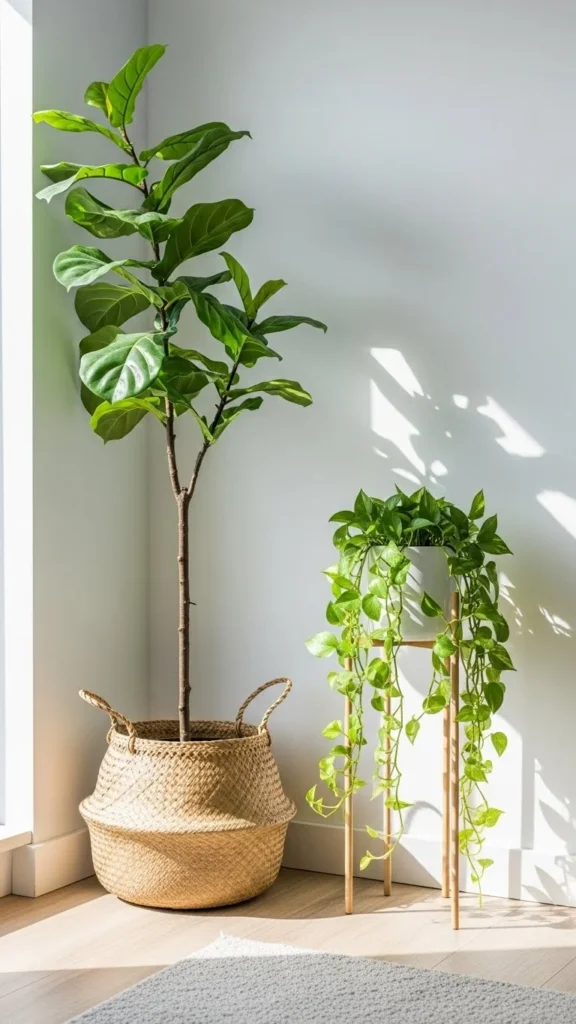
Plants in corners feel lush rather than messy when styled thoughtfully.
Layer Plants at Different Heights for Visual Interest
Just like décor, plant styling benefits from variety and movement. Using different levels makes your arrangement feel natural and curated.
Use:
- Floor plants
- Tabletop plants
- Shelf plants
- Hanging plants
- Window ledge plants
Layering creates depth and helps your space feel balanced instead of flat.
Aim for three height levels within the same area for an organic, designer look.
Mix Plant Shapes & Textures to Create Balance
Not all plants are created equal in shape or texture—and that’s good! Mixing plant forms makes your décor feel vibrant rather than repetitive.
Pair different shapes:
- Broad leaves (monstera)
- Tall spiky leaves (snake plant)
- Delicate trailing vines (pothos)
- Compact rosettes (succulents)
Texture gives your greenery dimension and personality. A mix of shapes will always look more intentional than using similar-looking plants everywhere.
Choose Stylish Pots That Match Your Decor
The pot matters just as much as the plant. Think of planters as décor pieces that enhance the overall vibe of the room.
Great planter materials:
- Ceramic
- Terracotta
- Woven baskets
- Concrete
- Metal
Tips:
- Match pots to your color palette
- Use consistent materials for cohesion
- Mix in a few statement planters for interest
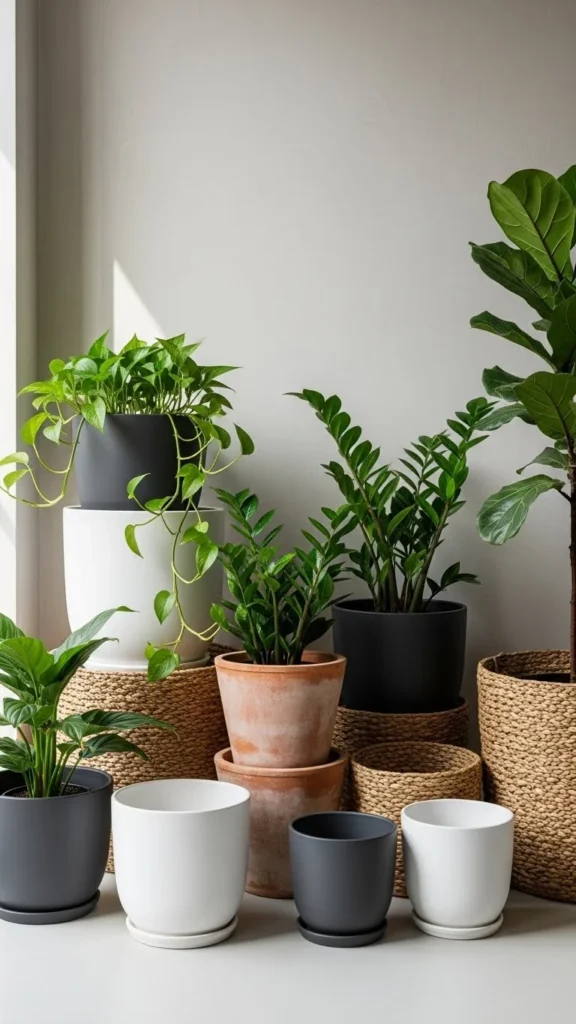
Pretty pots make plants feel intentionally integrated into your space.
Use Plants as Part of Your Shelf Styling
Shelves can easily look stiff or over-decorated. Plants instantly soften them.
Try:
- A trailing pothos cascading off the edge
- A mini succulent beside books
- A medium plant acting as a shelf anchor
- A small vase with fresh clippings
Plants break up the rigidity of books and décor objects, creating a more balanced shelf aesthetic.
Create Small Plant Groupings for Impact
While a single plant can look special, grouping plants amplifies the visual effect.
Grouping tips:
- Use odd numbers (3 or 5)
- Mix heights and leaf shapes
- Keep pots within the same color family
- Add a candle or décor object to complete the grouping
Plants look more stylish when grouped with intention rather than scattered randomly.
Use Plants to Bring Life Into Neutral or Minimal Spaces
Plants pair beautifully with minimalist or neutral décor because they add warmth without visual clutter.
Try adding:
- A tall plant beside a neutral sofa
- A trailing vine near minimal wall art
- A tabletop plant in an all-white kitchen
- Hanging plants to soften clean lines
They introduce color and vibrancy while keeping the aesthetic calm and clean.
Incorporate Plants Into Your Rooms Functionally
Plants don’t just look good—they can also enhance how you use a space.
Examples:
- A calming plant near your reading chair
- An air-purifying plant in the bedroom
- A set of herbs in the kitchen
- A small plant on your desk for mood boost
Function adds to the feeling of intentionality.
Don’t Forget About Plant Placement for Light & Health
Even the best styling won’t look good if your plants aren’t healthy. Always consider the light requirements of each plant.
Common lighting guidelines:
- Bright indirect light: monstera, fiddle leaf, rubber plant
- Low light: snake plant, ZZ plant
- Direct light: cacti, succulents
Healthy plants make your décor look fresh, vibrant, and alive.
Final Takeaway
Plants add more than beauty—they bring movement, texture, freshness, and soul to your home. When you choose the right plants, style them thoughtfully with pots and placement, and mix shapes and heights, your space will feel intentional, harmonious, and full of life.
Save this guide for later and start styling plants like a true home décor enthusiast!
Leave a Reply