

Lighting has the power to completely transform your living room. A space can feel warm or cold, cozy or harsh, inviting or flat—all depending on how you use light. Designers know that the real magic comes from layering different types of lighting: ambient, task, and accent. When done well, layered lighting turns your living room into a beautifully lit, functional, and mood-boosting space.
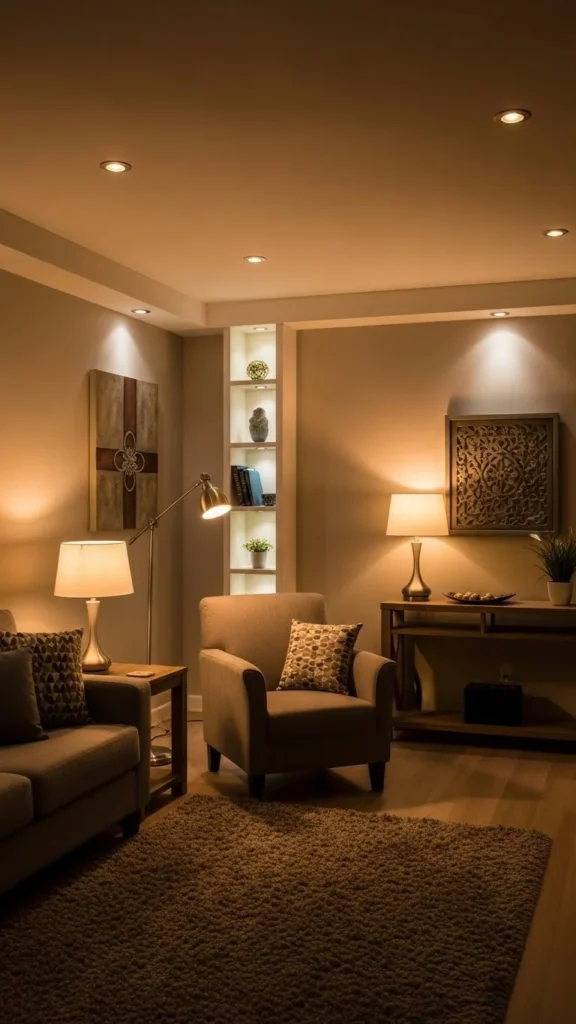
Let’s break down exactly how to layer lighting like a pro.
Start With Ambient Lighting: The Foundation of the Room
Ambient lighting is your base layer—the general illumination that fills the entire room. It’s the lighting you switch on first and what creates overall visibility.
Great ambient lighting options:
- Ceiling fixtures
- Chandeliers
- Flush or semi-flush mounts
- Recessed lighting
- Large floor lamps
Ambient lighting should be soft and even, not overly bright or harsh. Use warm light bulbs (2700–3000K) to create a cozy glow rather than a clinical feel.
If your ceiling light feels too intense, use dimmers—they instantly add flexibility and help control mood.
Add Task Lighting for Function & Purpose
Task lighting supports activities that require focused illumination—reading, working on your laptop, crafting, or playing games.
Best task lighting options:
- Table lamps
- Adjustable floor lamps
- Swing-arm wall sconces
- Desk lamps for multifunctional spaces
Task lighting should be placed strategically—beside seating, next to your sofa, or near your favorite reading chair.
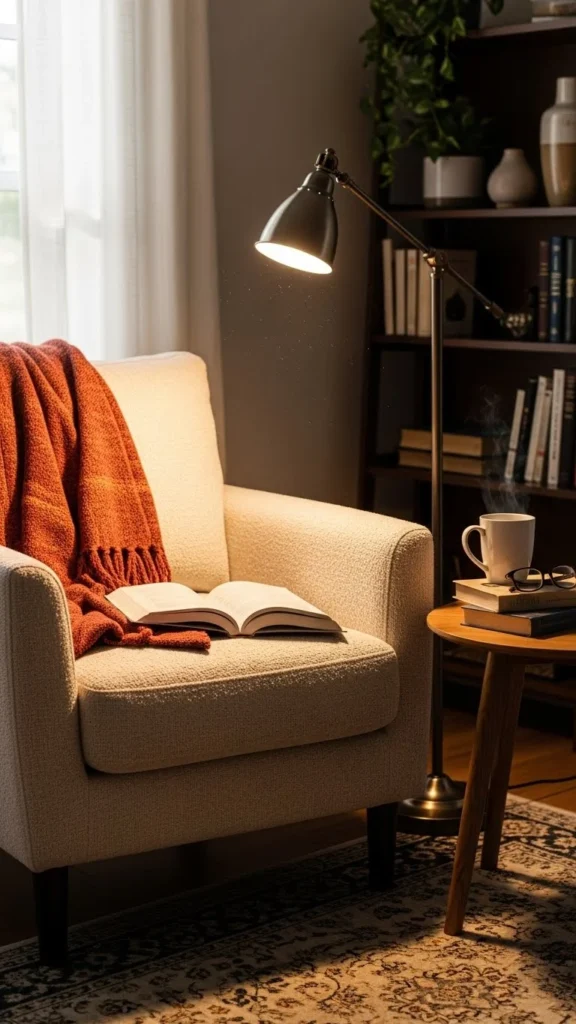
Task lighting doesn’t need to be bright—just directional and intentional.
Incorporate Accent Lighting to Add Depth & Style
Accent lighting is the secret layer that designers use to add character. It highlights your décor, creates texture, and elevates the entire room.
Beautiful accent lighting ideas:
- Picture lights above artwork
- LED strips behind shelves or TVs
- Spotlights pointed at plants or sculptures
- Decorative lamps (ceramic, glass, sculptural)
- Candle-style lighting
Accent lighting creates visual interest and gives your room that Pinterest-worthy glow.
Use the Rule of Three for Perfect Balance
A well-lit living room uses all three lighting layers—but also uses multiple sources within each category.
The designer-approved guideline:
- At least 3 light sources in medium rooms
- 5–7 light sources in larger or open-concept rooms
These don’t all need to be lamps. They can include:
- Overhead fixtures
- Wall sconces
- Accent lamps
- LED strips
- Candlelight
This layering ensures your living room feels warm and dynamic—not flat or shadowy.
Mix Heights to Create Visual Flow
Lighting layered at different heights adds depth and dimension.
Aim to mix:
- Ceiling-level lighting (ambient)
- Eye-level lighting (task)
- Low-level lighting (accent, table lamps, candlelight)
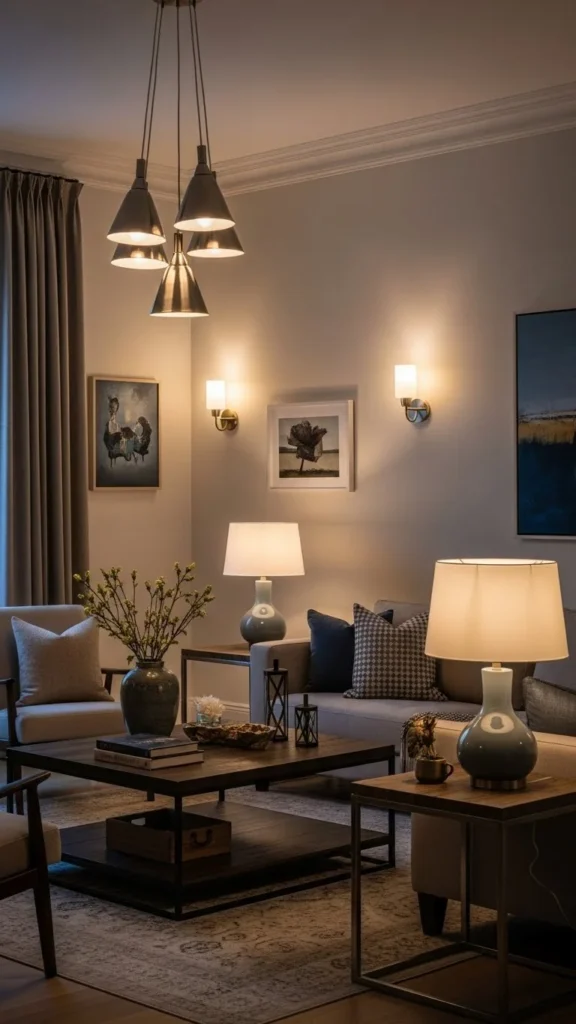
This creates a lighting “landscape” that feels intentional and professionally designed.
Choose Fixtures That Match Your Style—but Don’t Overmatch
Lighting is more than practical—it’s décor. Choose fixtures that complement your design style without making everything too matchy.
Examples:
- A modern chandelier paired with warm brass lamps
- Matte black sconces complemented by glass table lamps
- A natural woven pendant with ceramic accent lights
Mixing materials (metal, wood, glass, fabric) adds personality.
Tip: Keep at least one repeated finish—like brass or black—to maintain cohesion.
Use Dimmers to Control Mood Instantly
If you want your living room lighting to feel truly flexible, add dimmers—every designer’s secret weapon.
Dimmers let you:
- Brighten the room for cleaning
- Soften lighting for movie nights
- Create cozy ambiance for evenings
- Adjust brightness based on natural light
You can even use smart bulbs for full control from your phone.
Balance Light Temperature for a Harmonious Look
Light temperature can drastically alter the feeling of your room.
Use warm bulbs:
- 2700K–3000K = cozy, relaxing mood
- Avoid cool white (4000K+) in living rooms
Cool light makes spaces feel sterile, while warm light adds comfort.
Try to keep all bulbs in the room within the same temperature range for a cohesive glow.
Highlight Architectural Features or Favorite Decor
Accent lighting can spotlight the most beautiful parts of your living room.
Try highlighting:
- A textured wall
- Built-in shelves
- Beautiful plants
- Art pieces
- A fireplace mantle
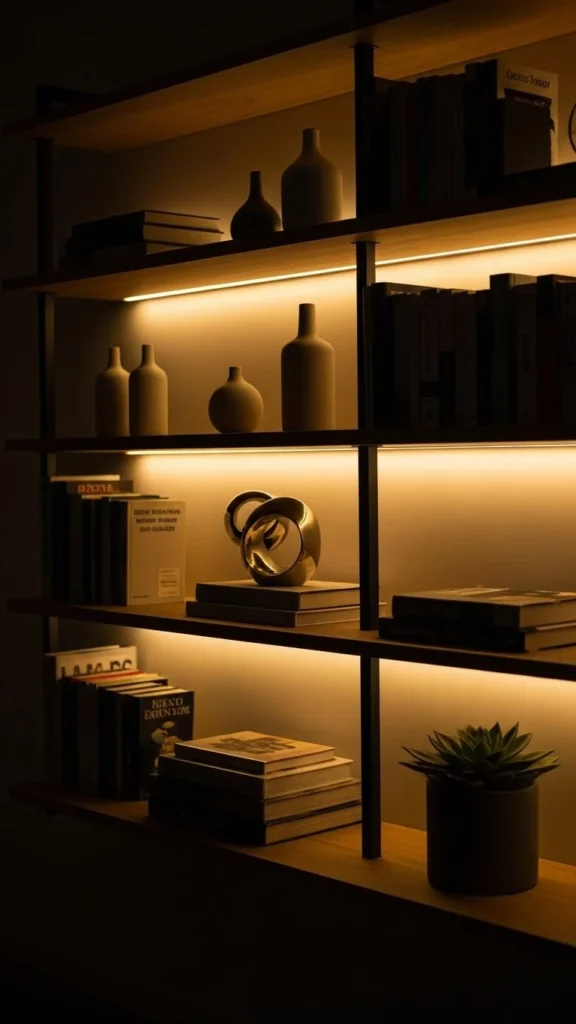
This adds depth and makes your room feel curated and intentional.
Final Takeaway
Layering ambient, task, and accent lighting is the key to creating a living room that’s functional, stylish, and irresistibly cozy. When you mix lighting heights, use dimmers, choose warm bulbs, and incorporate decorative fixtures, your space transforms instantly.
Save this guide for later and start lighting your living room like a designer!
Leave a Reply