

Minimalist kitchens are loved for their clean lines, uncluttered surfaces, and calm aesthetic. But there’s a fine line between minimal and sterile. If your kitchen looks sleek yet feels a little too cold or impersonal, you don’t need to add more decor—you need to add the right warmth.
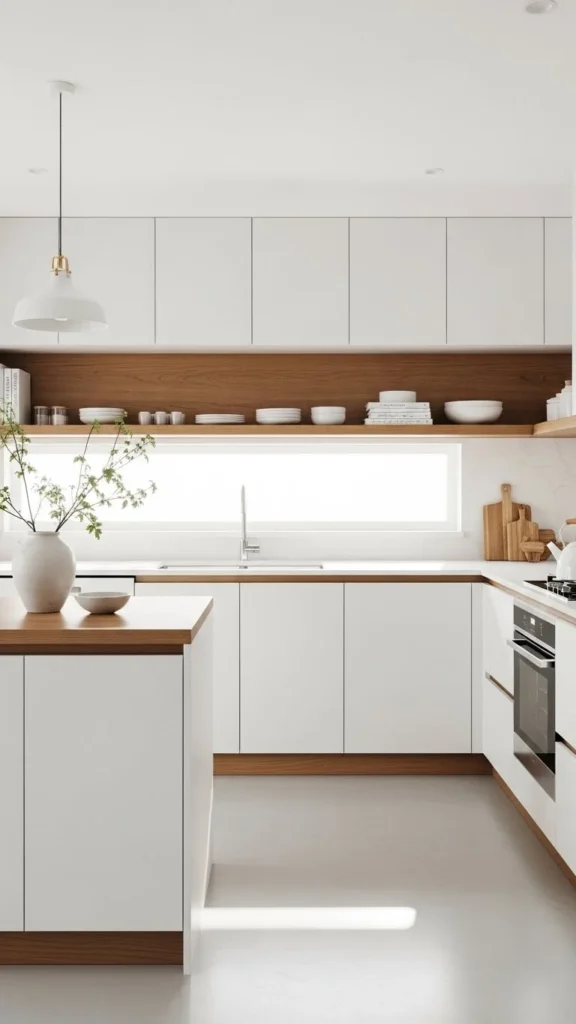
With thoughtful textures, warm tones, and intentional styling, you can keep your minimalist kitchen simple and inviting. Here’s how to do it the right way.
Start With Warm Neutrals Instead of Stark White
Minimalism doesn’t mean everything has to be bright white. In fact, overly cool whites can make a kitchen feel harsh and unwelcoming.
To soften the look:
- Choose warm whites, creams, or soft greige
- Balance cool tones with beige or taupe accents
- Avoid high-contrast black-and-white everywhere
Even small shifts in tone make a big difference. Warm neutrals maintain the minimalist look while adding subtle comfort.
Use Natural Materials to Add Quiet Warmth
Texture is the secret weapon of a warm minimalist kitchen. Natural materials add depth without clutter.
Focus on:
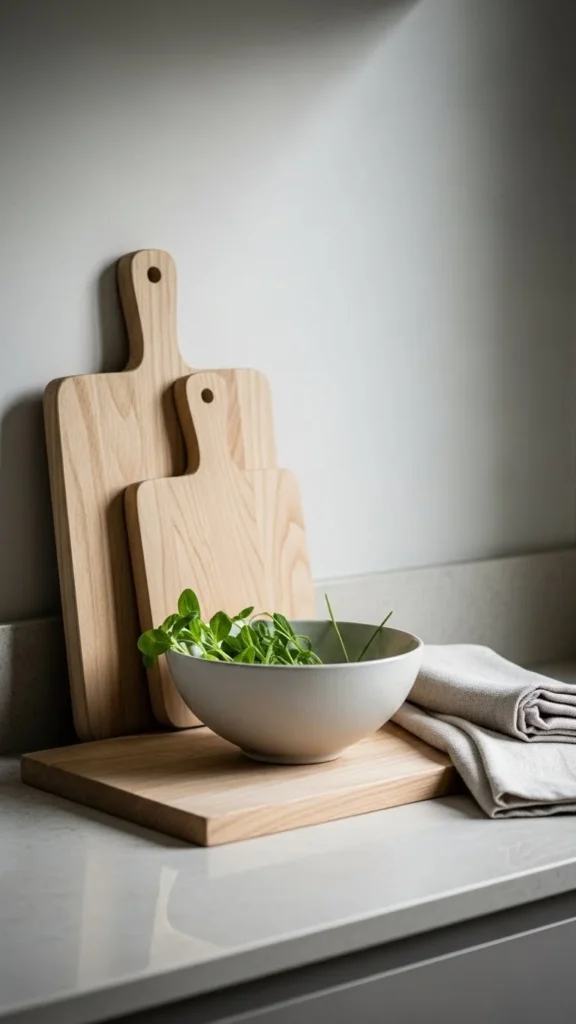
- Wood cutting boards or stools
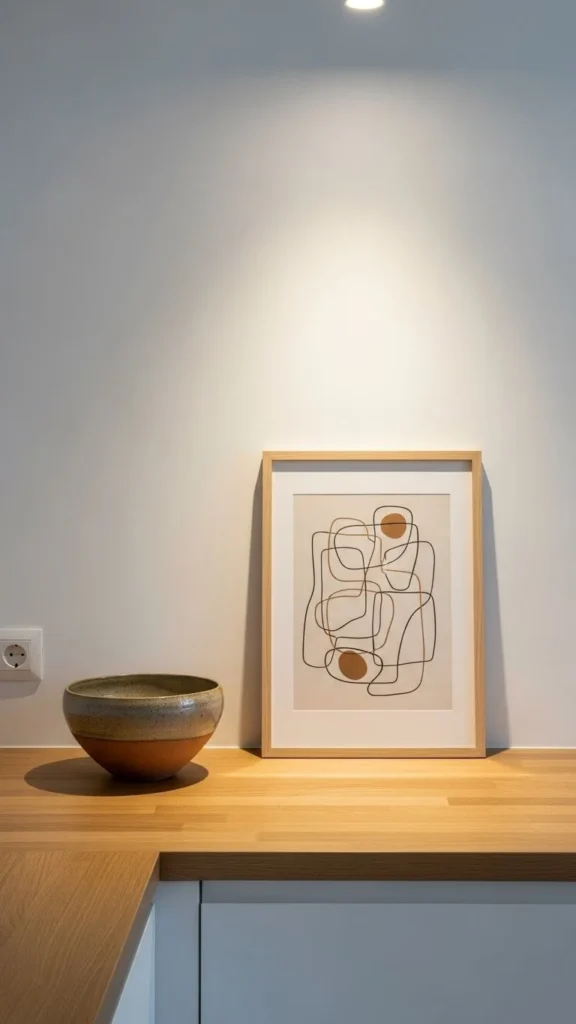
- Ceramic or stone bowls and containers
- Linen or cotton dish towels
These elements bring warmth without disrupting the clean aesthetic.
Keep Countertops Clear—but Not Empty
Minimalist countertops should feel calm, not bare. The key is intentional placement.
Instead of spreading items out, create one small styling moment:
- A wooden tray with oil and salt
- A ceramic utensil holder
- A cutting board leaned against the backsplash
Limit yourself to one zone per counter section. This keeps the space functional and visually warm.
Add Soft, Layered Lighting
Lighting can completely change how a minimalist kitchen feels. Bright, cool lighting often contributes to that “cold” feeling.
Warm it up by:
- Switching to warm LED bulbs
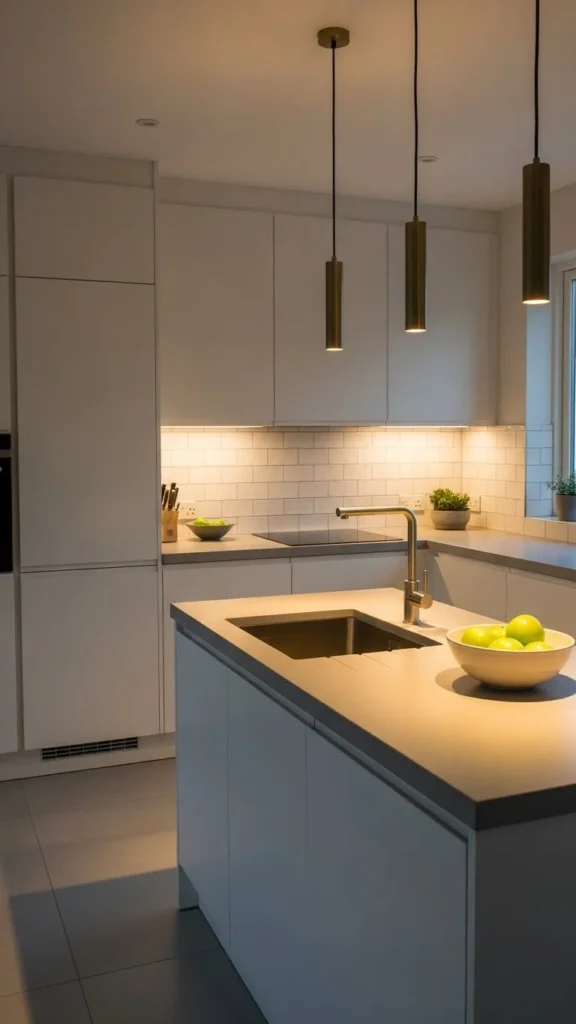
- Adding under-cabinet lighting
- Using pendant lights with a soft glow
Layered lighting creates depth and makes the kitchen feel cozy, especially in the evenings.
Introduce Organic Shapes to Balance Clean Lines
Minimalist kitchens are full of straight edges—cabinets, islands, backsplashes. Adding gentle curves helps soften the space.
Easy ways to do this:
- Rounded bowls or vases
- Curved pendant lights
- Arched cutting boards or trays
These shapes add visual interest without overwhelming the simplicity.
Use Plants Sparingly for Life and Warmth
A touch of greenery instantly brings warmth and life to a minimalist kitchen. The key is restraint.
Best plant ideas:
- A single potted herb on the counter
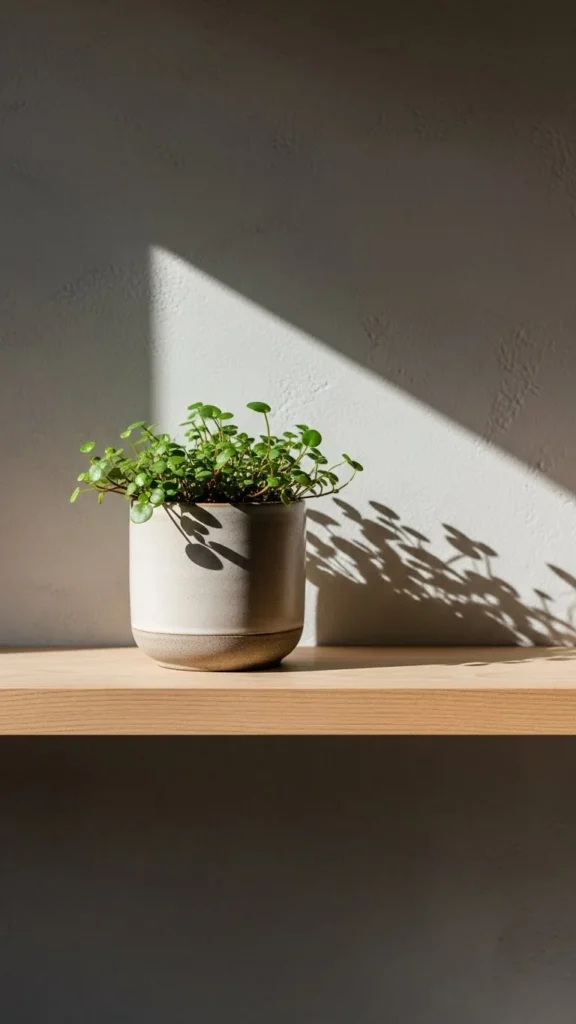
- One small plant on open shelving
- A simple vase with fresh stems
Stick to neutral planters in ceramic or stone to keep the look clean.
Choose Textiles That Feel Soft and Intentional
Minimalist kitchens often have lots of hard surfaces. Textiles help balance that out.
Add warmth with:
- Linen or waffle-weave dish towels
- A neutral runner near the sink
- Cushioned stools in leather or fabric
Avoid bold patterns or novelty prints. Simple textures do the work quietly.
Repeat Materials for a Cohesive Look
Minimalism thrives on repetition. When materials repeat, the space feels intentional and calm.
For example:
- Wood appears in stools, boards, and shelves
- Ceramic repeats in bowls and containers
- One metal finish is used throughout
This subtle consistency is what makes a minimalist kitchen feel designer-level rather than unfinished.
Edit Ruthlessly—but Thoughtfully
Minimalism isn’t about owning nothing—it’s about keeping only what adds value.
Do regular edits:
- Store rarely used appliances
- Remove decor that doesn’t serve a purpose
- Keep only daily essentials visible
When every item earns its place, the kitchen feels peaceful instead of cold.
Add One Personal Touch
A minimalist kitchen still needs personality. One meaningful item can add warmth without clutter.
Ideas include:
- A handmade ceramic bowl
- A framed minimalist print
- A favorite wooden serving piece
This single touch keeps the space from feeling showroom-like.
Final Takeaway
Styling a minimalist kitchen without it feeling cold is all about balance. Warm neutrals, natural textures, soft lighting, and intentional decor create a space that feels calm and welcoming. You don’t need more items—just better choices.
Minimal doesn’t have to mean empty. It can feel cozy, thoughtful, and beautifully lived-in.
✨ Save this guide for later when your minimalist kitchen needs a warm refresh.
Leave a Reply