

Kitchen walls are tricky. Leave them bare, and the space can feel unfinished. Decorate them too much, and suddenly the kitchen feels cluttered, busy, and overwhelming. The sweet spot is thoughtful, minimal wall decor that adds personality without stealing attention from the rest of the room.
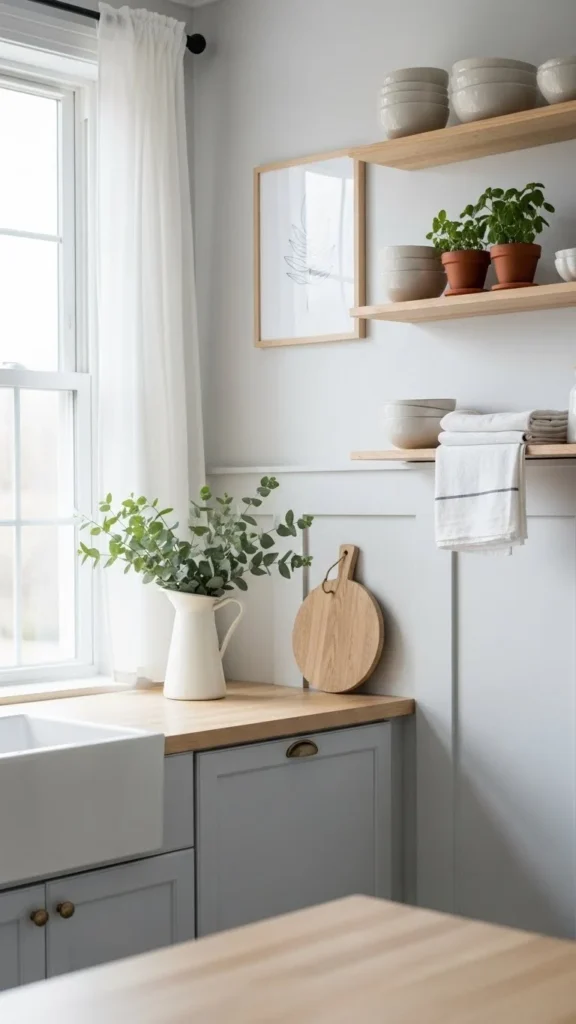
If you’ve ever wondered how to decorate your kitchen walls just enough, this guide will show you how to strike that perfect balance.
Start by Deciding What the Wall Needs (If Anything)
Not every kitchen wall needs decor. Some walls are meant to stay visually quiet, especially in small or busy kitchens.
Before adding anything, ask:
- Is this wall already visually busy (cabinets, backsplash, windows)?
- Does this area feel empty or just uncluttered?
- Will decor improve function, mood, or flow?
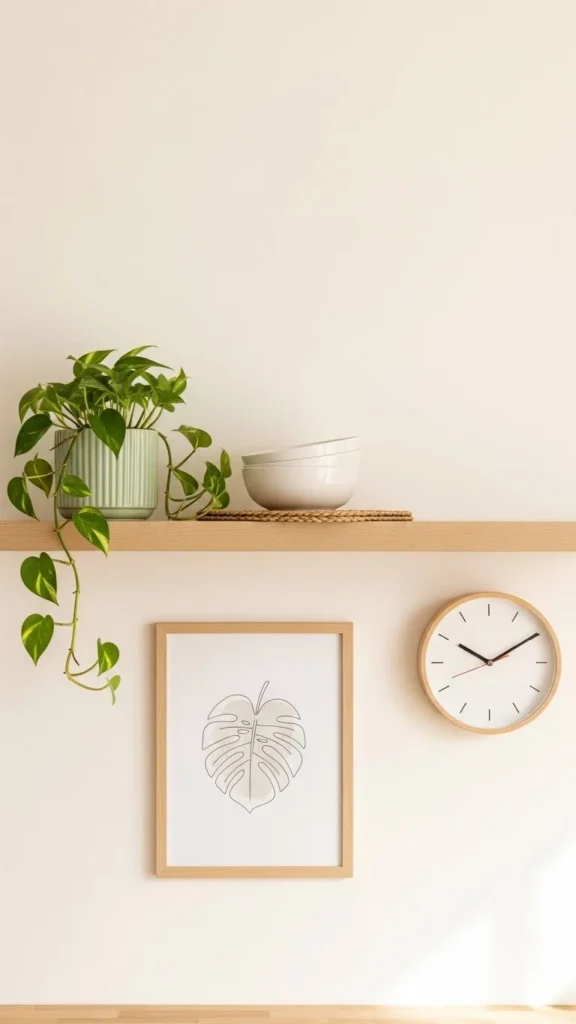
Designers often leave walls bare on purpose. Intentional empty space helps the rest of your decor stand out.
Choose One Main Wall Feature Per Area
A common mistake is trying to decorate a wall with multiple focal points. Instead, choose one main feature per wall.
Good single-feature options include:
- One framed art print
- A slim floating shelf
- A small rail for mugs or utensils
- A short section of open shelving
Once you choose the feature, stop there. Let it breathe.
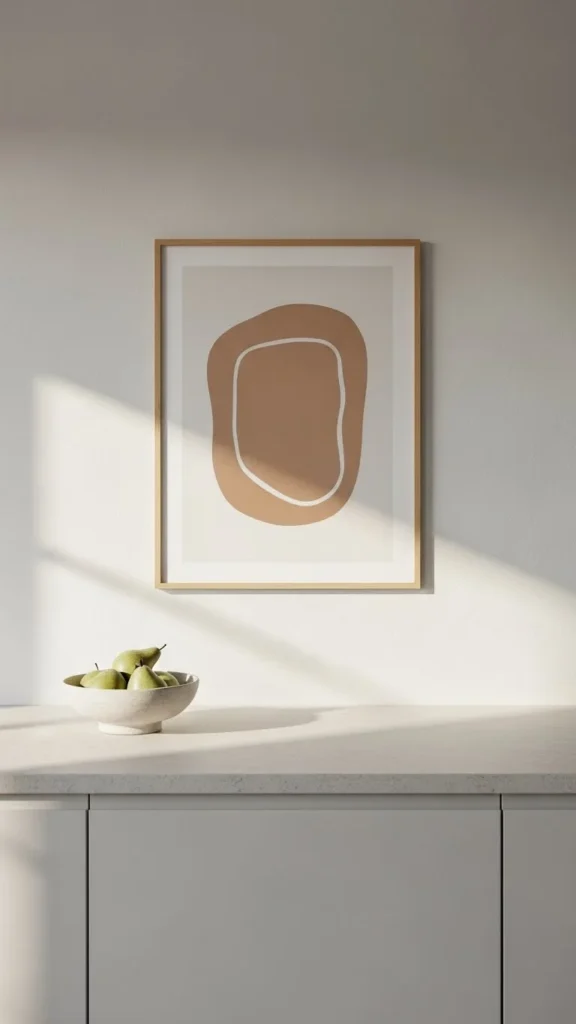
Keep Art Simple and Kitchen-Appropriate
Art can look beautiful in kitchens—but it needs to be subtle. Loud colors or oversized pieces can overwhelm the space quickly.
Best art styles for kitchens:
- Minimal line drawings
- Botanical or food-inspired prints
- Soft landscapes or abstract neutrals
- Black-and-white photography
Stick to simple frames in wood, black, or white. Avoid word art or novelty signs if you want a timeless look.
Use Open Shelves as Wall Decor (Carefully)
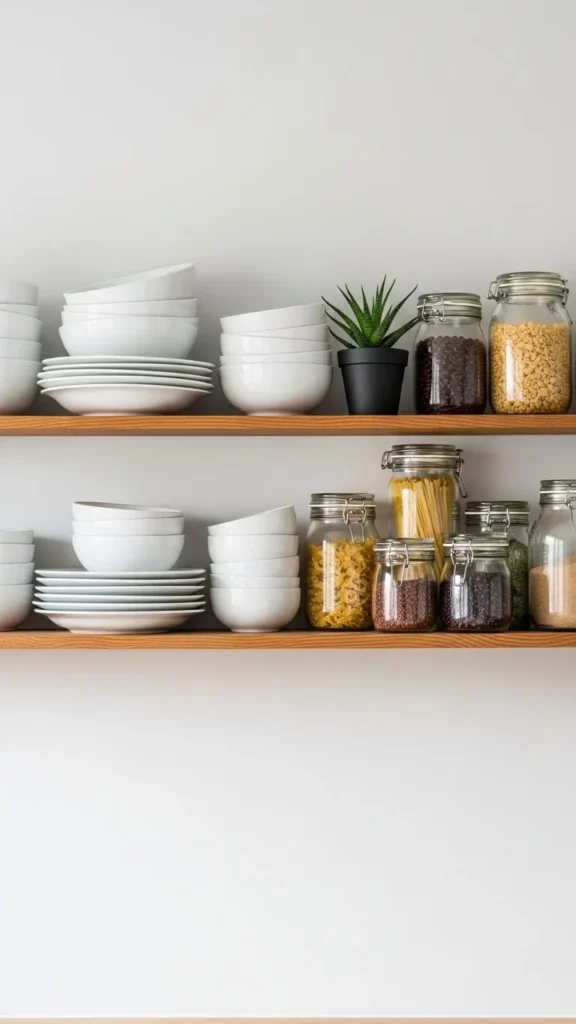
Open shelving doubles as storage and wall decor, making it one of the smartest options—when styled with restraint.
How to avoid overdoing it:
- Limit shelves to one small section
- Use neutral dishes and glassware
- Leave empty space between groupings
- Add only one decorative element per shelf
If shelves feel crowded, they’re doing too much.
Try Functional Decor That Earns Its Place
The best kitchen wall decor often has a purpose. Functional decor adds interest without feeling excessive.
Smart functional wall ideas:
- A slim rail with a few hanging mugs
- Hooks for frequently used utensils
- A wall-mounted paper towel holder
- A magnetic knife strip
When wall decor is useful, it feels intentional—not decorative clutter.
Pay Attention to Scale and Spacing
Decor that’s too large can dominate a wall. Decor that’s too small can look scattered. Scale matters.
Helpful guidelines:
- Leave at least 6–8 inches of space around wall decor
- Avoid filling wall corners just to fill them
- Keep decor proportional to nearby cabinets or counters
One well-sized piece almost always looks better than several small ones.
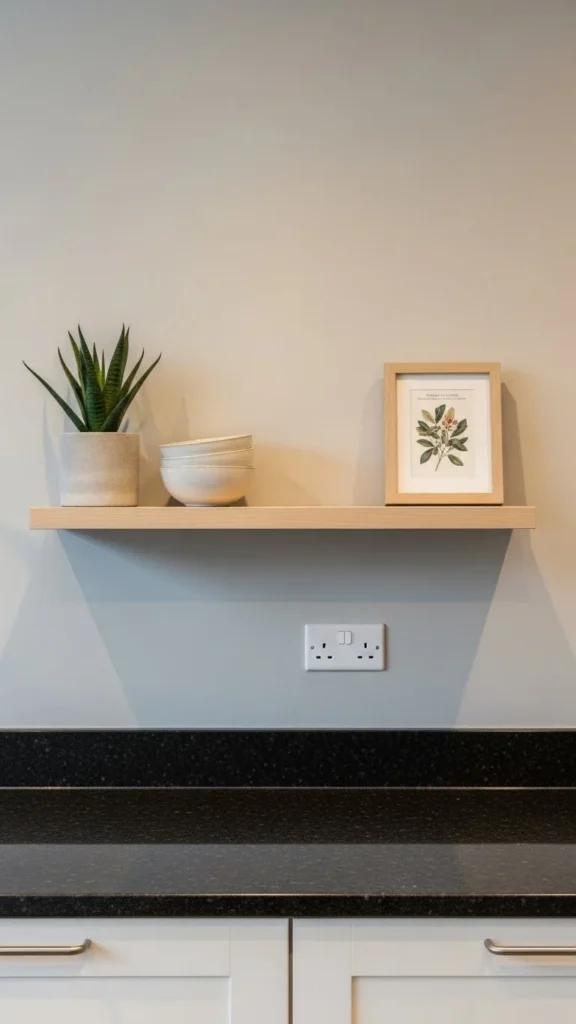
Limit Color to Keep Walls Calm
Kitchen walls already compete with cabinets, appliances, and backsplashes. Too much color on the walls can tip the balance.
For a calm look:
- Stick to 1–2 wall decor colors
- Repeat colors already used in the kitchen
- Avoid mixing too many frame finishes
Neutral walls with subtle accents feel more polished and less chaotic.
Use Texture Instead of More Items
If walls feel flat but you don’t want more decor, add texture instead of objects.
Easy texture ideas:
- A wood shelf or rail
- A woven wall basket (one only)
- A ceramic wall-mounted piece
Texture adds warmth without visual noise.
Know When to Stop (This Is Key)
The moment your eye starts jumping from item to item, it’s time to stop decorating.
A good rule:
- Decorate 30–40% of available wall space
- Leave the rest intentionally blank
Quiet walls make kitchens feel cleaner, larger, and more inviting.
Final Takeaway
Decorating kitchen walls without overdoing it is all about restraint and intention. Choose one focal point, keep colors and textures simple, and let empty space work in your favor. When wall decor feels purposeful—not forced—the entire kitchen feels more balanced.
You don’t need more decor.
You need better placement.
✨ Save this guide for later when your kitchen walls start to feel a little too busy.
Leave a Reply