

Awkward-shaped rooms can feel impossible to decorate. Maybe it’s an angled wall, a narrow layout, an odd bump-out, or a room that just doesn’t seem to follow any traditional shape. But here’s the good news: with the right strategy, you can turn even the strangest layout into a stylish, functional space you love.
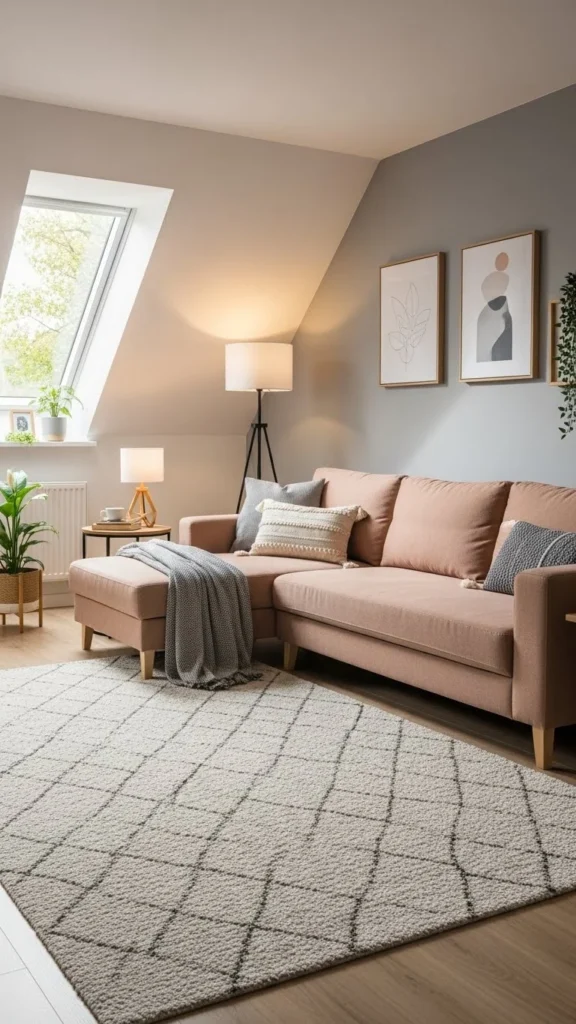
Let’s break down how to arrange furniture in tricky spaces without losing style—or your sanity.
Start by Defining the Room’s Purpose
Before moving any furniture, decide how the room will actually function. Awkward spaces become easier to work with when you know their primary job.
Ask yourself:
- Is this room for lounging?
- Working?
- Dining?
- Storage?
- A multi-purpose mix?
Once you know the room’s purpose, you can choose furniture that fits the function instead of trying to force pieces that don’t work.
Use a Rug to Create a Visual Anchor
Rugs are magic in awkward rooms because they create a clear zone—especially in spaces that feel disconnected or oddly shaped.
Rugs help:
- Define seating areas
- Create structure
- Anchor floating furniture
- Make asymmetrical layouts feel intentional
Choose a rug large enough to hold all front legs of your main furniture pieces.
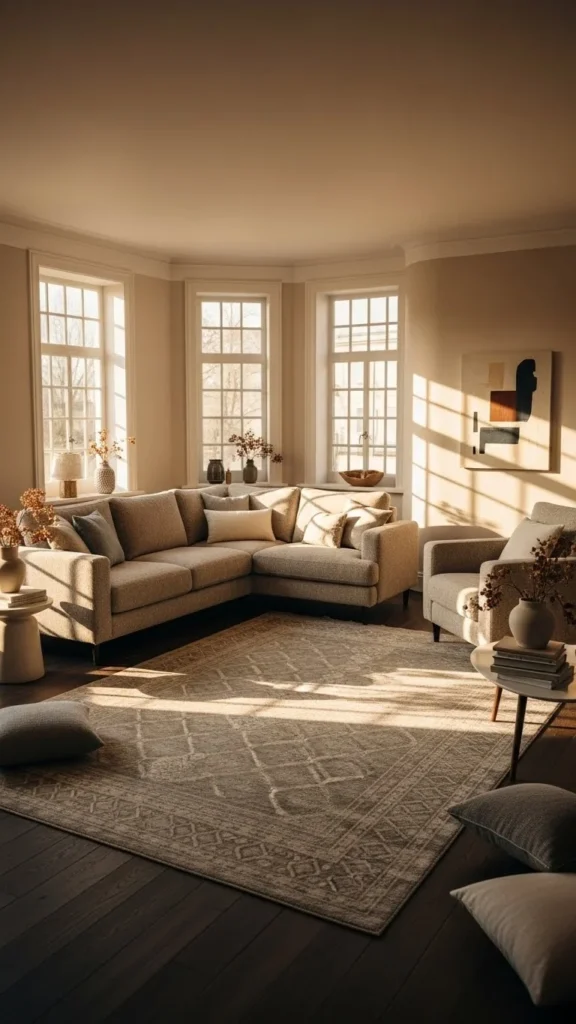
A well-placed rug immediately gives your room direction.
Float Furniture Instead of Pushing Everything Against the Walls
People often push furniture against the walls of awkward rooms hoping to “open the space,” but this usually has the opposite effect.
Floating furniture:
- Creates natural pathways
- Makes the layout feel purposeful
- Helps balance odd angles
- Breaks up long, narrow rooms
Try positioning your sofa away from the wall or using a console table behind it to define the area.
Floating pieces give you far more flexibility than sticking to the room’s perimeter.
Divide the Room Into Zones—Even if It’s Small
Oddly shaped rooms often work better when divided into smaller functional zones rather than treated as one large, confusing space.
Examples:
- A reading nook in a small corner
- A workspace against a straight wall
- A conversation seating area in the center
- A console table and mirror by an awkward bump-out
Each zone doesn’t need walls—it just needs purpose.
Zoning lets you embrace the room’s quirks instead of fighting them.
Use Curved or Compact Furniture to Fit Tight or Odd Angles
Rectangular furniture can feel too rigid in rooms with angled or curved architecture. Curved pieces soften the layout and make awkward spots feel more inviting.
Try using:
- Rounded coffee tables
- Curved sofas
- Circular side tables
- Soft-edge ottomans
Compact furniture is also great for tight corners or narrow walkways where larger pieces overwhelm the space.
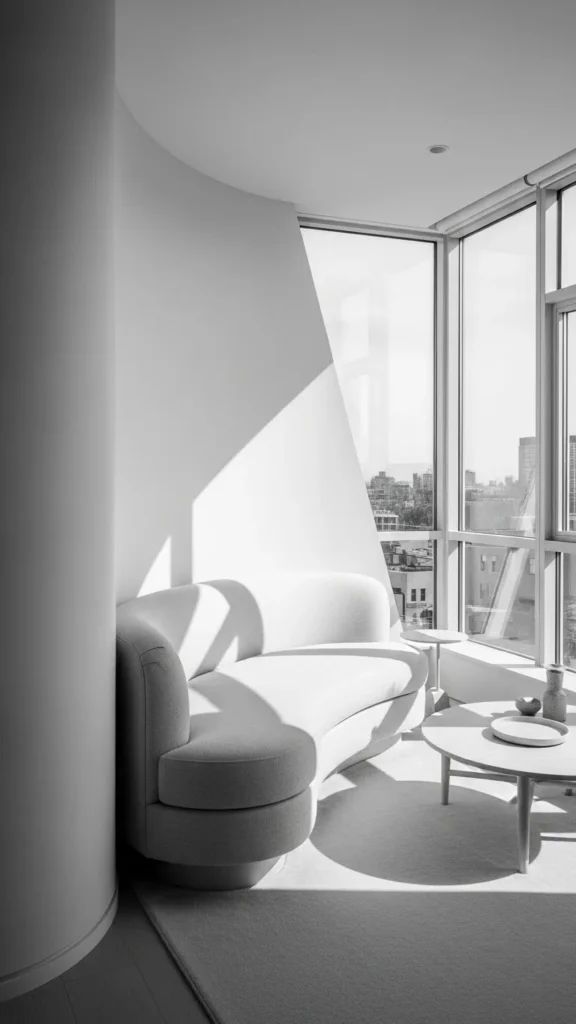
Curves create flow and help the room feel balanced.
Make Use of Vertical Space When Floor Space Feels Tricky
When the floor layout isn’t cooperating, look up. Vertical elements draw attention upward and shift the focus away from the room’s awkward shape.
Vertical styling ideas:
- Tall bookshelves
- Floor lamps
- Vertical artwork
- Hanging plants
- Wall-mounted storage
Using height also frees up ground space, making the room feel more open and intentional.
Create Focal Points to Distract From Odd Architecture
A strong focal point can help downplay awkward lines or unusual corners.
Good focal point options:
- A fireplace
- Large artwork
- A styled console table
- A bold accent wall
- A stunning light fixture
When the eye has a clear place to land, the room feels calmer and more cohesive.
Anchor your furniture around the focal point—even if the room shape isn’t symmetrical.
Use Lighting to Balance the Room
Uneven lighting can emphasize awkward room shapes. Layered lighting smooths out shadows and adds warmth.
Combine:
- Overhead lighting
- Table lamps
- Floor lamps
- Sconces
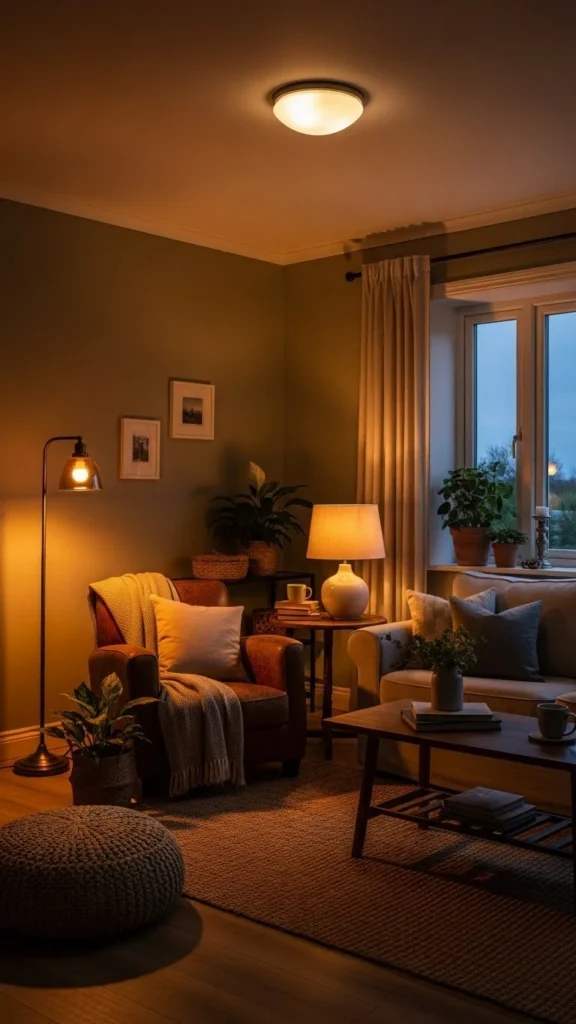
Good lighting makes any layout feel intentional.
Accept & Highlight the Quirks Instead of Hiding Them
Awkward rooms often end up being the most charming once you learn to work with their uniqueness.
Try embracing:
- A slanted ceiling with dramatic lighting
- A weird corner turned into a plant oasis
- A bump-out used for a built-in bookshelf
- A narrow wall turned into an art gallery
Don’t force a “perfect” layout. Let the room’s architecture guide your creativity.
Final Takeaway
Awkward-shaped rooms don’t need to be a design headache. With the right tools—zoning, floating furniture, curved pieces, smart lighting, and strong focal points—you can transform any strange space into a stylish, functional room you truly enjoy.
Save this guide for later and start styling your awkward room with confidence and creativity!
Leave a Reply