

Creating a home that feels cohesive doesn’t mean every room should look the same. In fact, the best-designed homes flow beautifully while still having unique personality in each space. The secret is finding a balance—shared elements that create harmony and intentional differences that keep things interesting.
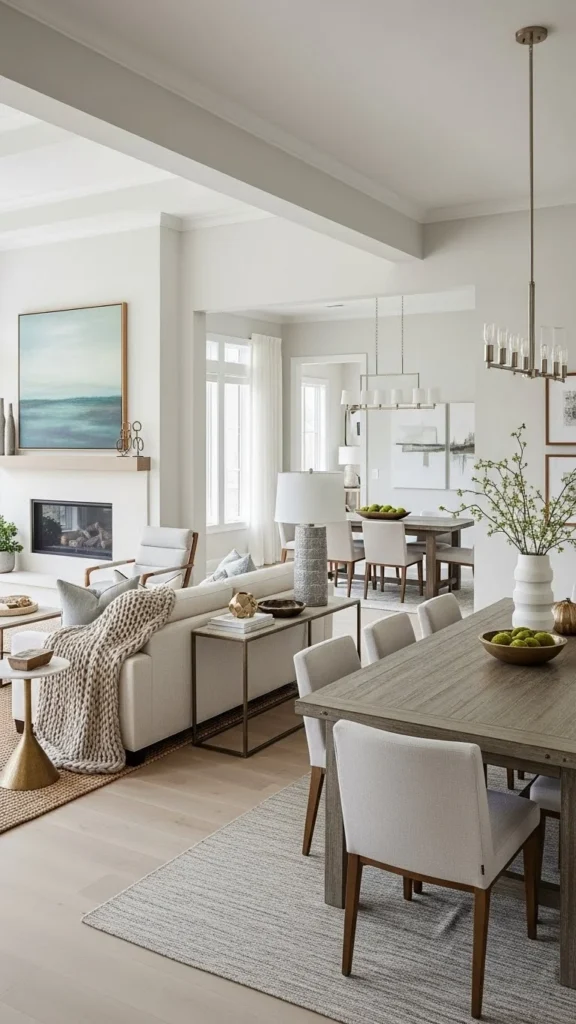
Here’s how to design a unified home that feels connected—never repetitive.
Start With a Whole-Home Color Palette
A cohesive home begins with a shared color story. Choosing a consistent palette ensures your spaces feel connected, even if you decorate each room differently.
How to create your palette:
- Choose 1–2 main neutral colors that anchor every room.
- Pick 2–3 accent colors you can sprinkle throughout the home.
- Add seasonal or mood-based pops for personality.
Your palette doesn’t have to dominate every room—it should simply appear in small, subtle ways, like pillows, artwork, rugs, or accessories.
Use Repeating Materials & Textures
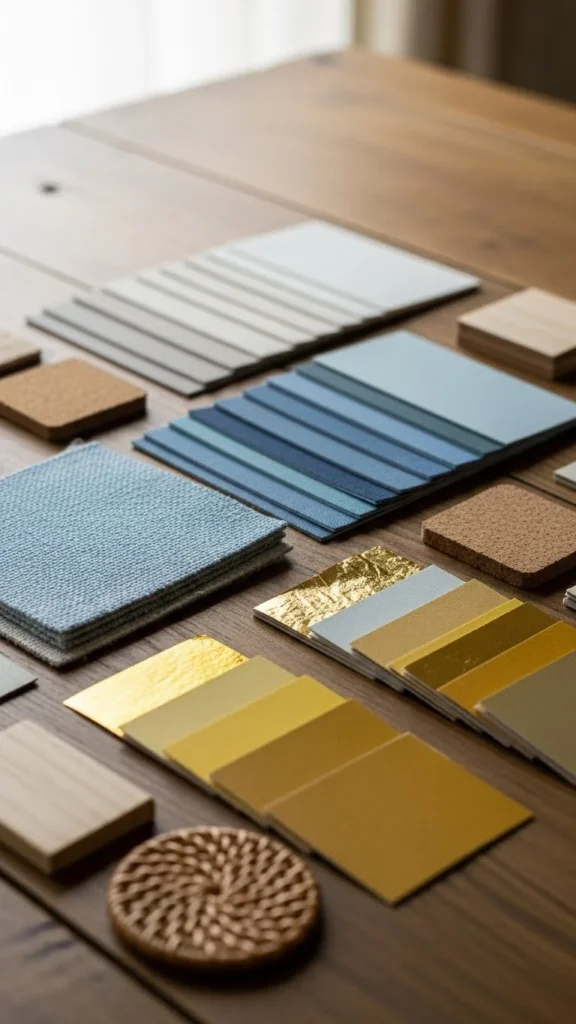
Decorating with consistent materials and textures is one of the easiest ways to unify multiple rooms.
Try repeating:
- Natural wood tones
- Linen or cotton fabrics
- Matte black or brass hardware
- Woven baskets or rattan details
- Stone or ceramic finishes
When materials repeat, your home feels intentional without looking overly coordinated.
Even if each room has a different theme, the shared textures help everything flow.
Change the Mood, Not the Style
A cohesive home isn’t about identical styling—it’s about consistency in design language. For example, if your overall aesthetic is modern farmhouse, you can vary the mood in each room without breaking the theme.
Examples:
- A cozy, warm-toned living room
- A crisp, airy kitchen
- A soft, calming bedroom
- A playful, colorful office
The style stays recognizable, but each space takes on its own personality.
Choose Consistent Lighting Styles
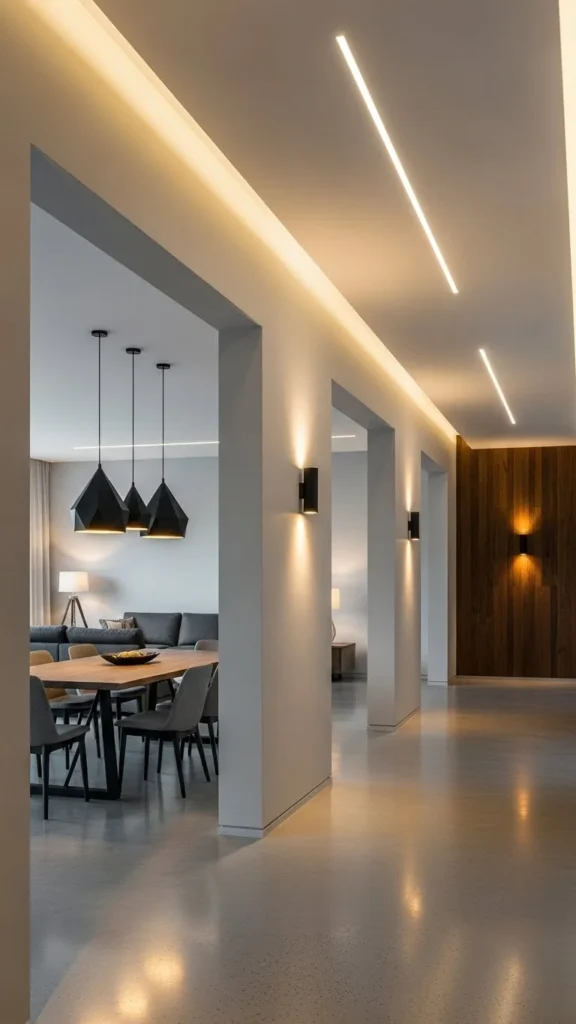
Lighting ties everything together. Consistent shapes, finishes, or tones create unity throughout the home.
Consider repeating:
- Black or brass fixtures
- Dome or globe-shaped pendants
- Warm white bulbs
- Lamps with linen shades
Different rooms can have different fixtures, but if the style family matches, the home feels cohesive.
Repeat Key Décor Elements in Subtle Ways
You don’t need identical décor in every room—just repeating small accents helps everything feel connected.
Ideas include:
- Similar pillow fabrics
- Matching metal finishes
- A signature plant type (like snake plants or eucalyptus)
- Repeating patterns such as stripes or geometrics
- Consistent frame colors for wall art
Think of these elements like your home’s “signature style notes.”
Use Artwork to Create Flow Across Rooms
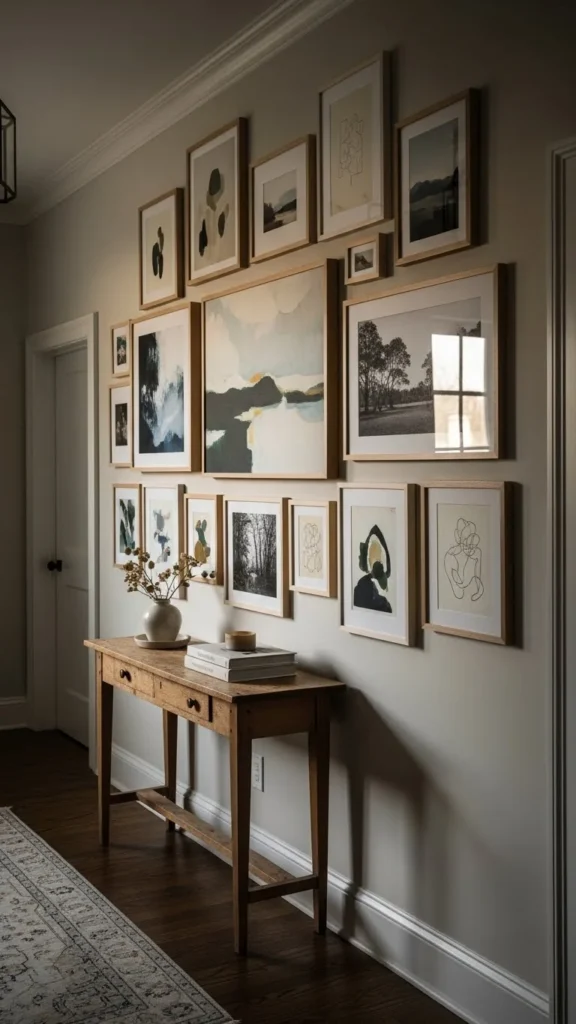
Art is an excellent way to unify spaces while still keeping things interesting.
Try:
- Coordinating artwork styles (abstract, line art, photography)
- Matching frame materials
- Using similar color tones
- Creating themes (nature, travel, architecture)
Each room can have different pieces, but the similarities build continuity.
Keep Flooring & Trim Consistent
Designers often say: If you want cohesion, start at the bones.
Consistent flooring and trim create a seamless foundation throughout your home.
If changing flooring isn’t an option:
- Use rugs that echo the same palette
- Paint trim the same color throughout
- Keep baseboards or doors consistent in style
This stabilizes the home visually, even if décor varies.
Add Personality Through Room-Specific Accents
Now for the fun part—injecting personality!
Give each room unique features that still work within the overall design system:
- A bold paint color in one room
- Patterned wallpaper in another
- A dramatic light fixture in the dining room
- Playful art in a kids’ room
- Cozy textiles in the bedroom
These elements bring vibrancy and character without sacrificing cohesiveness.
Use Transition Spaces Intentionally
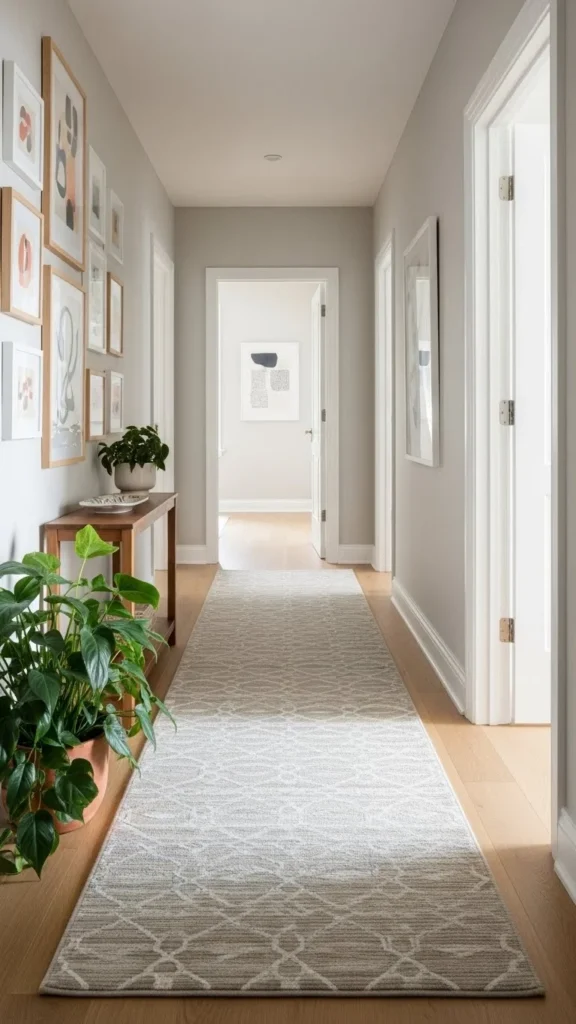
Hallways, entryways, and staircases serve as bridges between rooms—so decorate them with the goal of smooth transitions.
Good options:
- Neutral or shared accent colors
- Simple rugs
- Coordinated art pieces
- Plants that repeat the rest of the home’s greenery
- Mirrors to brighten and expand the space
Transition spaces should feel like connective tissue—not design afterthoughts.
Final Takeaway
Creating a cohesive home isn’t about matching everything—it’s about thoughtful repetition and intentional differences. When you use a unified palette, repeat key textures, and maintain consistent design language, your home feels harmonious. Add unique accents in each room, and you’ll avoid boredom while keeping style flowing beautifully from space to space.
Save this article for later so you can start designing a home that feels connected, stylish, and uniquely yours!
Leave a Reply