

Open shelving can completely change how a kitchen feels. It can make a small space look lighter, add personality, and keep everyday items within easy reach. But without the right approach, open shelves can also feel cluttered or chaotic. The secret is styling them with intention, not filling them just to fill space.
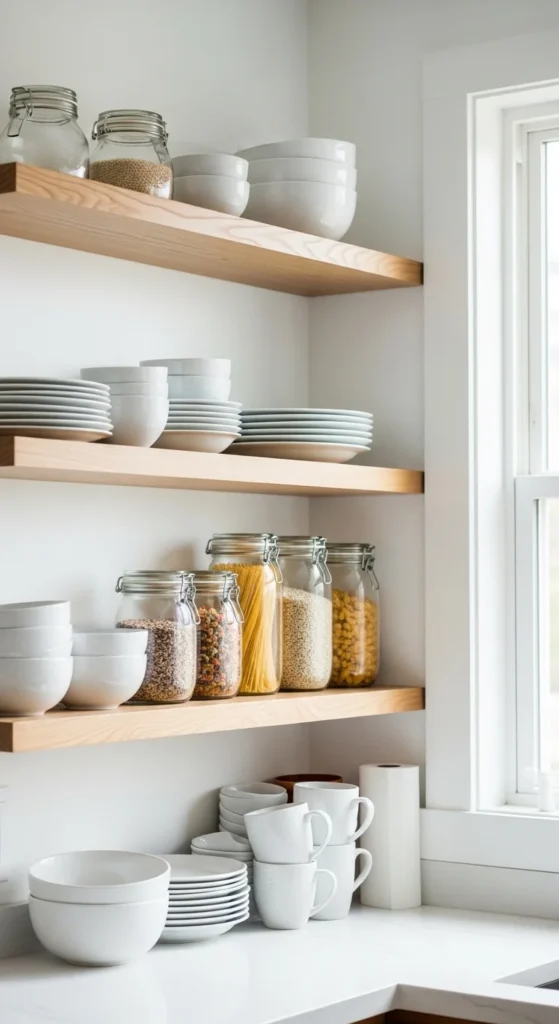
This guide walks you through practical, realistic ways to decorate a kitchen with open shelving so it feels balanced, functional, and easy to maintain.
Start by Choosing the Right Shelves
Before styling anything, look at the shelves themselves. Their size, depth, and placement matter more than most people expect.
Good open shelves are:
- Not too deep, so items don’t feel crowded
- Mounted at comfortable reach height
- Evenly spaced for visual balance
Wood shelves add warmth, while painted shelves blend into the wall. Both work well, so choose what fits your kitchen style.
If shelves feel overwhelming, start with just one section instead of replacing all upper cabinets at once.
Use Everyday Items as Decor
Open shelving works best when it holds items you actually use. This keeps shelves practical and easy to reset.
Great everyday items for shelves:
- Plates and bowls
- Glassware and mugs
- Mixing bowls
- Frequently used pantry items
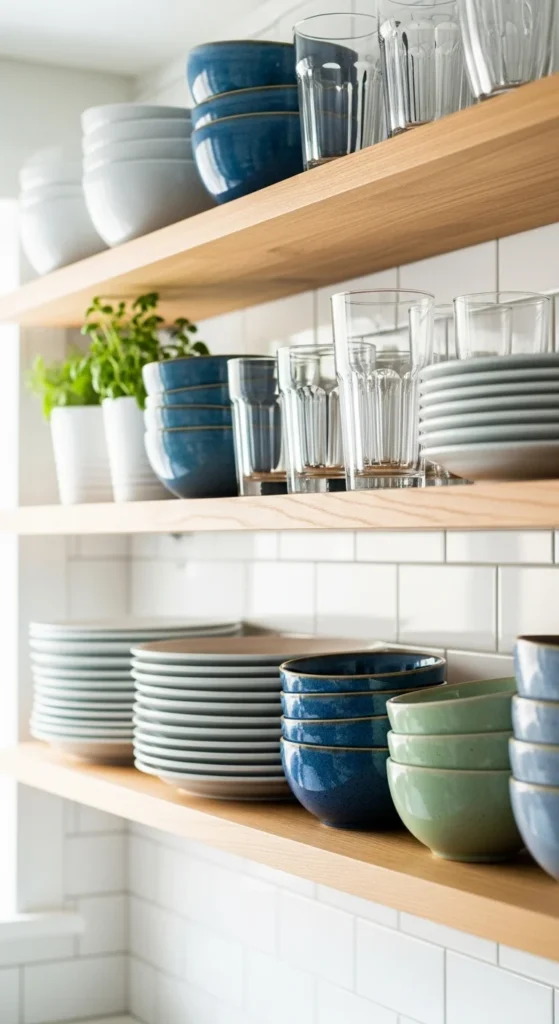
Avoid putting rarely used gadgets on display. If something only comes out once a year, it belongs in a cabinet.
Stick to a Limited Color Palette
Color control is what keeps open shelves from looking messy. Too many colors compete for attention.
A simple approach:
- One main color (often white or cream)
- One supporting neutral (wood, beige, gray)
- One small accent color
This makes shelves feel calm even when they’re full. Clear glass and neutral ceramics are especially helpful for visual balance.
If your dishware is colorful, group similar colors together instead of spreading them out.
Mix Heights and Shapes Carefully
Shelves look more natural when items vary slightly in height and shape, but there should still be a sense of order.
Try this balance:
- Stack plates horizontally
- Stand cutting boards or trays vertically
- Mix short bowls with taller jars
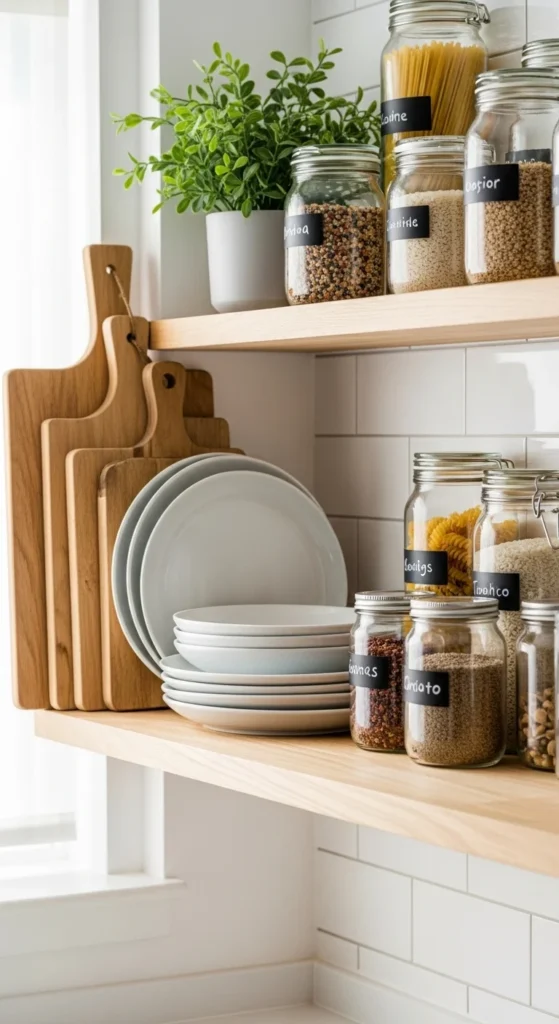
Avoid placing everything in a straight line. Small shifts in height help the shelves feel relaxed instead of rigid.
Leave Some Space Empty on Purpose
One of the biggest mistakes with open shelving is filling every inch. Empty space is part of the design.
Aim to:
- Leave small gaps between groups
- Keep at least one shelf partially empty
- Avoid lining items edge to edge
This breathing room makes the shelves easier to clean and easier on the eyes.
If a shelf feels crowded, remove one item and see how the whole arrangement improves.
Use Baskets and Jars to Hide Visual Clutter
Not everything needs to be visible. Baskets and jars help control visual noise while keeping shelves useful.
Good uses include:
- Baskets for snacks or packaged food
- Glass jars for dry goods
- Small bins for miscellaneous items
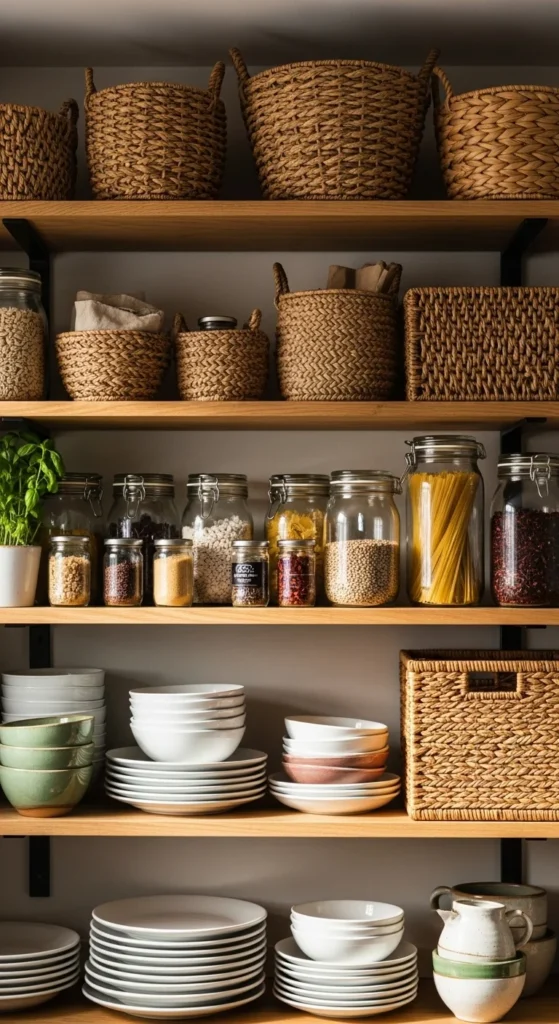
Choose baskets that fit the shelf depth so they don’t stick out too far. Matching baskets look calmer than mixed styles.
Add a Few Decorative Touches Only
Decorative items should support the shelf, not dominate it. One or two accents per shelf is usually enough.
Simple decorative ideas:
- A small plant
- A ceramic pitcher
- A framed recipe or art print
These items add personality without taking over. If decor starts pushing functional items aside, it’s too much.
Keep Shelf Maintenance Simple
Open shelves stay beautiful only when they’re easy to maintain. Styling should support daily habits, not fight them.
Helpful habits:
- Return items to the same spot every time
- Wipe shelves weekly to prevent dust buildup
- Edit seasonally to remove unused items
When shelves are easy to reset, they stay attractive without constant effort.
Balance Open Shelves With Closed Storage
Open shelving works best alongside some closed storage. This gives you a place to hide bulk items and visual clutter.
Use cabinets or drawers for:
- Small appliances
- Extra pantry stock
- Cleaning supplies
This balance keeps the kitchen practical while letting open shelves shine.
Final Thoughts
Decorating a kitchen with open shelving is about restraint, consistency, and everyday function. When shelves hold useful items, follow a simple color palette, and leave space to breathe, they feel warm and intentional instead of busy. You don’t need to style everything perfectly. Focus on what you use most and let the rest fade into the background.
Save this guide and try styling one shelf at a time. Open shelving can be both beautiful and practical when done with care.
Leave a Reply