

A kitchen can feel cold or unfinished when it relies only on paint, tile, and metal. Wood accents change that instantly. They add warmth, texture, and a sense of balance that works in modern, farmhouse, rustic, and minimalist kitchens alike. The best part is that you don’t need a full renovation to bring wood into the space. A few thoughtful choices can make a big visual difference.
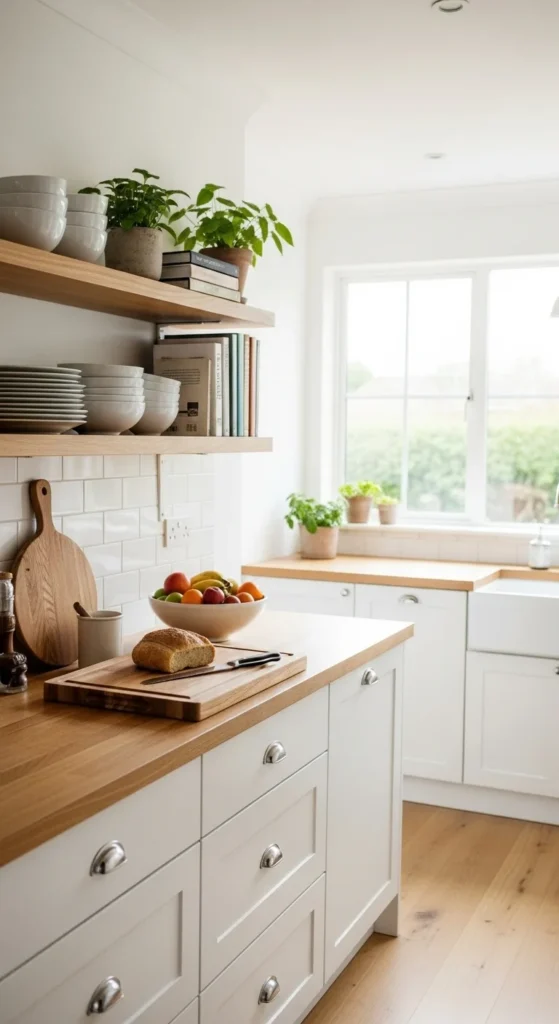
Decorating with wood is about layering, not overdoing it. This guide walks through practical ways to add wood accents so your kitchen feels welcoming, natural, and easy to live in.
Start With Small, Functional Wood Pieces
The easiest way to introduce wood is through items you already use every day. These pieces feel natural in a kitchen and never look forced.
Good starter wood accents include:
- Cutting boards leaned against the backsplash
- Wooden spoons and spatulas in a crock
- A wood pepper mill or salt box
- A simple wood tray for oils
These items soften hard surfaces like stone and tile without taking up extra space. Keep them grouped rather than scattered so they feel intentional.
Tip: mixing two or three wood items in one area works better than spreading them all over the kitchen.
Use Wood on Open Shelves and Cabinets
Wood shelves or cabinet accents instantly warm up a kitchen, especially when paired with light-colored walls or cabinets.
Ways to use wood here:
- Floating wood shelves instead of upper cabinets
- Wood trim on open shelving
- Wood cabinet doors on an island only
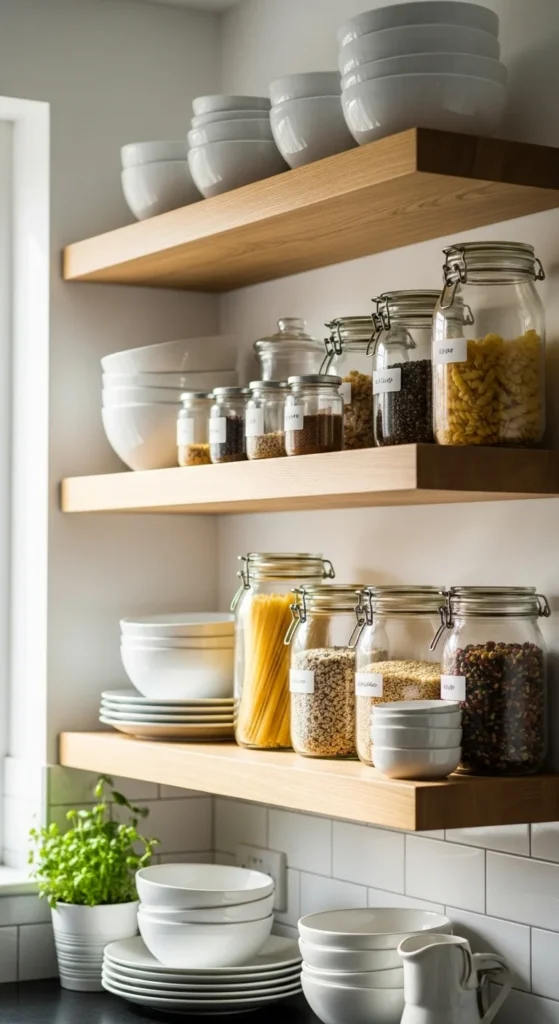
If replacing cabinets isn’t an option, focus on styling. White dishes, clear glass, and a few wood items on shelves create contrast without clutter.
Keep shelf styling simple. Let the wood be the feature.
Add Wood Through Furniture and Seating
Furniture is another great place to bring in wood without touching permanent fixtures.
Consider:
- Wood bar stools at the island
- A small wood dining table
- A bench with a natural finish
These pieces ground the space and help connect the kitchen to nearby rooms. Light to medium wood tones feel especially versatile and work with most color palettes.
If your kitchen already has dark elements, lighter wood can balance the look. If your kitchen is very light, slightly deeper wood adds depth.
Warm Up Counters With Wood Accessories
Counters are often the most visible part of the kitchen. A few wood accents here go a long way.
Good options include:
- A wood fruit bowl
- A narrow wood tray for daily items
- A bread box with a wood lid
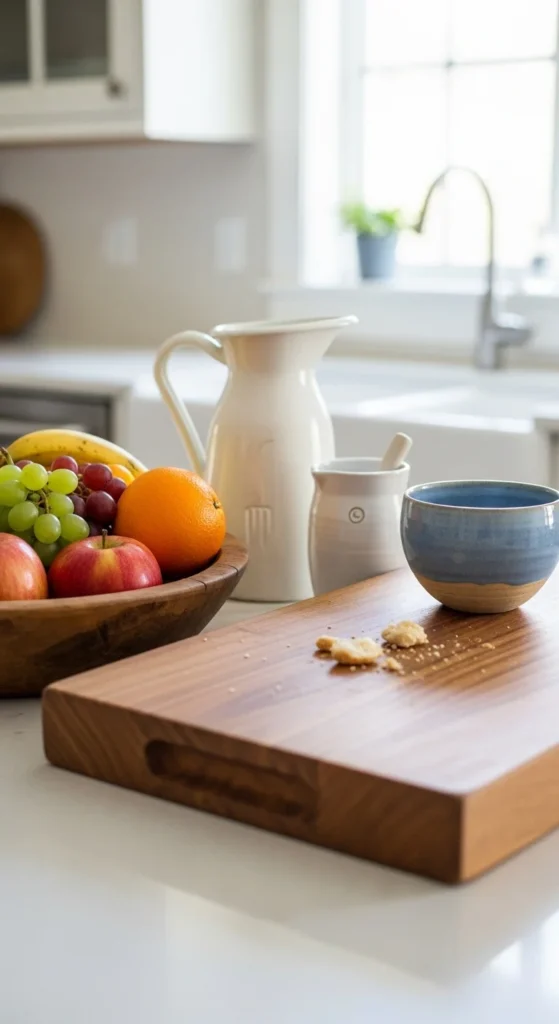
Avoid lining wood items across the entire counter. Grouping them in one spot keeps the space functional and clean.
If counters feel crowded, remove one item and see how much calmer the space feels.
Mix Wood With Neutral Colors
Wood looks best when paired with calm, neutral tones. White, cream, gray, and soft beige allow the wood grain to stand out naturally.
Easy ways to support wood accents:
- Neutral backsplashes
- Simple dishware
- Light-colored walls
This combination keeps the kitchen feeling open and timeless. Strong colors can still work, but they should play a supporting role rather than competing with the wood.
Use Wood to Balance Modern Kitchens
Modern kitchens often rely on sleek finishes and clean lines. Wood helps soften that look without changing the overall style.
Try adding:
- Flat wood cabinet fronts on an island
- A wood panel behind open shelves
- Minimal wood decor with simple shapes
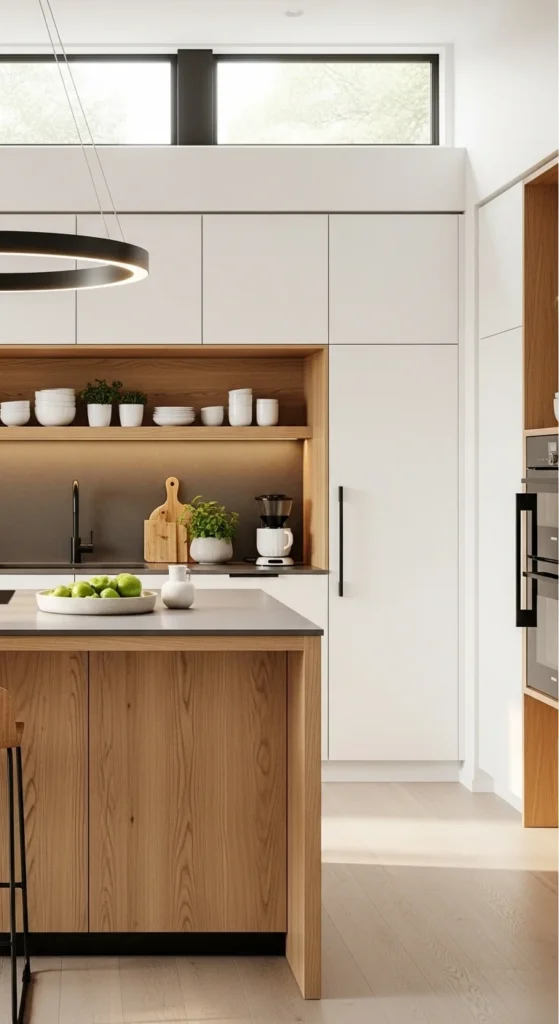
Stick to simple, straight-edged wood pieces in modern spaces. This keeps the look intentional and uncluttered.
Layer Different Wood Tones Carefully
Using more than one wood tone is fine, but moderation matters.
Helpful guidelines:
- Stay within two wood tones
- Keep undertones similar (all warm or all cool)
- Repeat each tone at least twice in the space
For example, if you have light wood shelves, repeat that tone in cutting boards or stools. This creates visual balance.
Too many wood tones can feel busy, so edit as you go.
Add Texture With Wood Details
Wood brings texture as well as color. This is especially helpful in kitchens with a lot of smooth surfaces.
Textured wood ideas:
- Carved bowls
- Slatted wood trays
- Butcher block surfaces
These details add depth without adding visual clutter. Even small textured pieces can make a kitchen feel more layered and comfortable.
Keep Wood Accents Clean and Maintained
Wood looks best when it’s cared for. Simple maintenance keeps it looking good long-term.
Basic care tips:
- Wipe with a damp cloth regularly
- Oil cutting boards and butcher blocks as needed
- Keep wood away from standing water
Well-kept wood accents age beautifully and add character over time.
Final Thoughts
Decorating a kitchen with wood accents is about warmth, balance, and restraint. Small functional pieces, simple furniture, and thoughtful shelf styling can transform the space without major changes. Wood softens hard surfaces, adds texture, and makes kitchens feel more welcoming and lived-in.
Save this guide and start with one area of your kitchen. A few well-placed wood accents can completely change how the space feels, making it warmer, calmer, and easier to enjoy every day.
Leave a Reply