

A kitchen can feel crowded even when it’s clean. Decorative items pile up quickly, counters lose their breathing room, and the space starts to feel busy instead of welcoming. Decorating without clutter is about editing, spacing, and choosing pieces that earn their place. When done right, a kitchen can feel styled, warm, and practical at the same time.
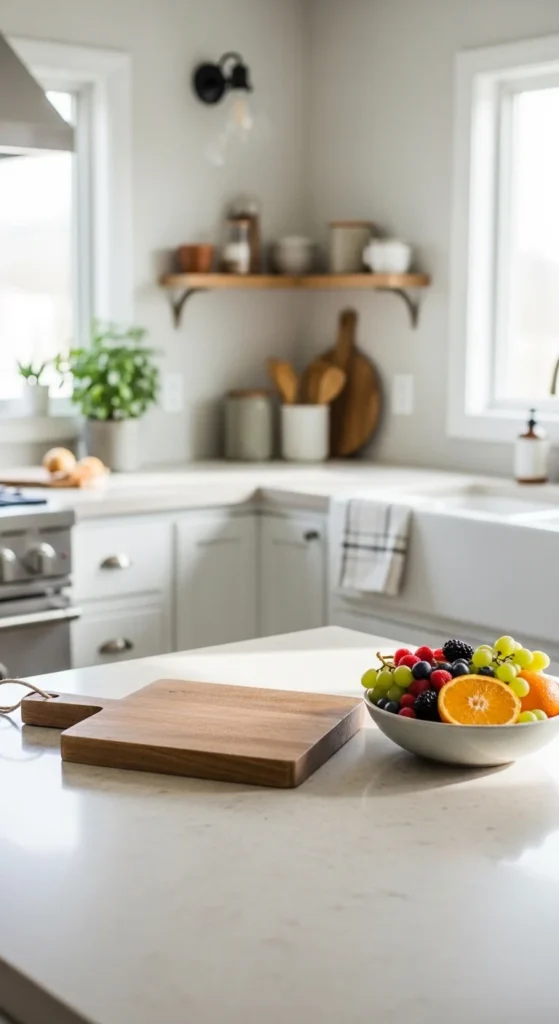
This guide focuses on simple, realistic ways to decorate your kitchen while keeping it easy to use every day.
Start With Clear Surfaces
Before adding anything decorative, remove what doesn’t belong. Clutter often comes from items that slowly collect on counters.
Clear away:
- Unused appliances
- Paperwork and mail
- Extra containers
- Decor that blocks workspace
Once surfaces are mostly clear, the kitchen immediately feels calmer. Decoration works best when it’s layered onto open space, not piled on top of clutter.
A good rule: decorate after you simplify, not before.
Decorate With Items You Already Use
The easiest way to avoid clutter is to decorate with functional pieces.
Good options include:
- Wooden cutting boards
- Ceramic bowls
- Utensil crocks
- Pitchers or jars
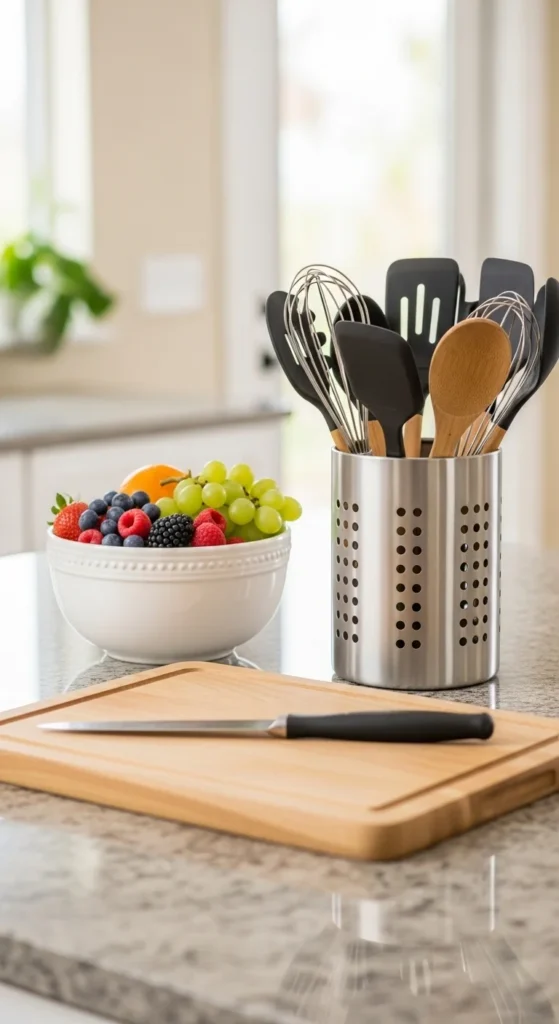
When everyday items look good and are used often, they don’t feel like clutter. Group them neatly instead of spreading them out.
If something is decorative but never used, it’s more likely to become visual noise.
Limit Each Area to One Styled Moment
Instead of decorating every surface, choose one focal spot in the kitchen.
Good places include:
- One section of the counter
- The corner near the sink
- A shelf or ledge
Everything else should stay simple. This approach keeps the kitchen feeling open while still adding personality.
If you style every corner, nothing stands out and the space feels crowded.
Use Trays to Contain Small Items
Trays are one of the best tools for clutter-free decorating. They visually group items and create clear boundaries.
Use trays for:
- Cooking oils and salt
- Coffee or tea essentials
- Soap and hand lotion near the sink
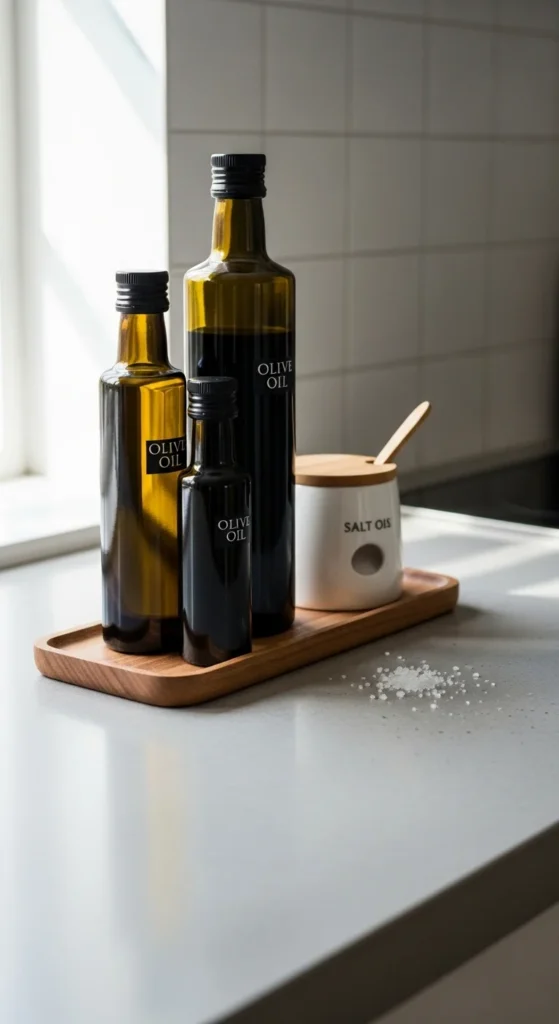
Choose trays that fit the space. Oversized trays quickly overwhelm smaller counters. If a tray starts filling up, remove one item.
Keep Decor Low and Lightweight
Tall or bulky decor blocks sightlines and makes kitchens feel smaller. Low-profile pieces work better.
Look for:
- Shallow bowls
- Low baskets
- Short vases
- Flat trays
Avoid tall stacks or layered decor. The more open space the eye can see, the less cluttered the kitchen feels.
Choose a Calm, Limited Color Palette
Too many colors create visual clutter, even when items are neatly arranged.
Stick to:
- Neutrals like white, beige, or gray
- Natural tones like wood or stone
- One subtle accent color if desired
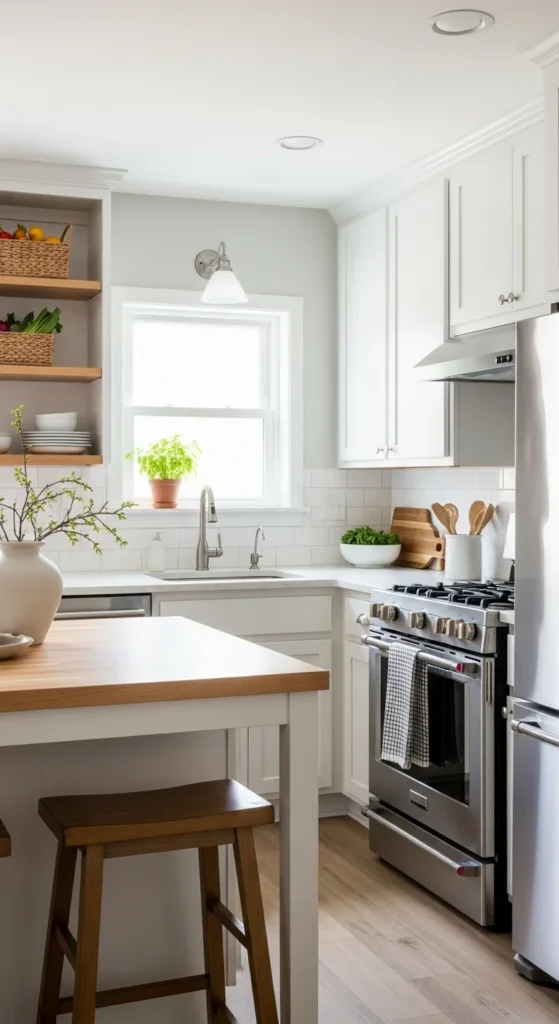
When decor shares similar tones, it blends instead of competing for attention.
Decorate With Texture Instead of Quantity
You don’t need many items to add interest. Texture can do that work quietly.
Easy texture ideas:
- Linen dish towels
- Woven baskets
- Matte ceramic pieces
- Light wood accents
Texture adds warmth without adding more objects. One textured piece often does more than several decorative items.
Keep Open Shelves Edited
Open shelves can look beautiful or chaotic depending on how they’re styled.
To keep them clutter-free:
- Leave space between items
- Use mostly functional pieces
- Stick to a consistent color range
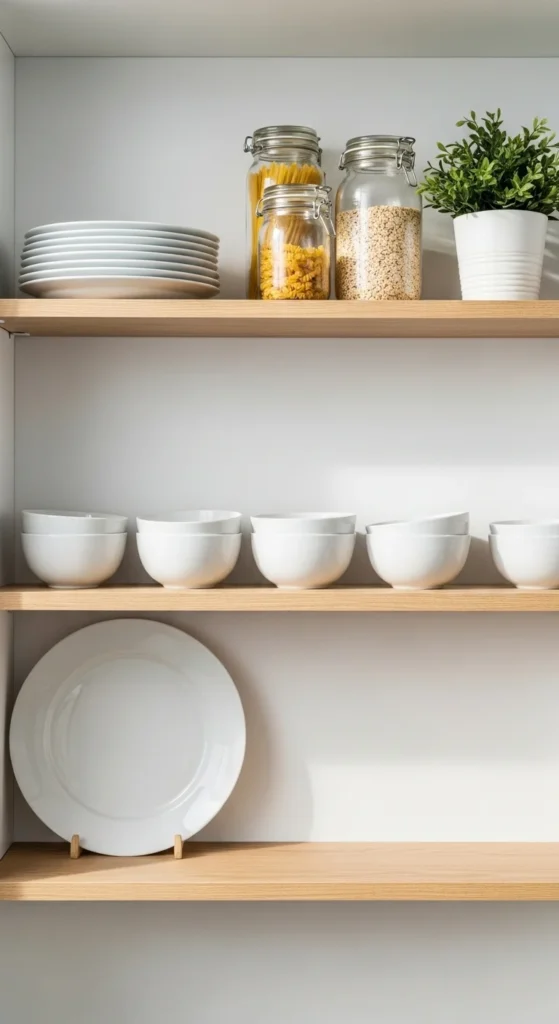
If shelves feel crowded, remove one or two items and reassess. Empty space is part of the design.
Rotate Decor Instead of Adding More
Decor doesn’t have to stay the same year-round. Rotating items prevents buildup.
Try:
- One seasonal bowl or towel
- Switching out a plant or artwork
- Moving decor between rooms
This keeps the kitchen feeling cared for without increasing clutter.
Create a Simple Daily Reset Habit
Even well-decorated kitchens feel cluttered when items drift out of place.
A quick daily reset helps:
- Return items to their spots
- Clear anything that landed on the counter
- Wipe surfaces lightly
This habit keeps decor intentional rather than accidental.
Focus on Breathing Room
The most important decorating element is what you don’t add.
Ask yourself:
- Is there open space to work?
- Does the counter feel crowded?
- Can the eye rest anywhere?
If the answer is no, remove one item and try again. Open space makes everything else look better.
Final Thoughts
Decorating a kitchen without adding clutter is about restraint, function, and thoughtful placement. When decor serves a purpose, stays grouped, and leaves room to breathe, the kitchen feels calm and inviting. You don’t need more items. You need the right ones, placed with intention.
Save this guide and start with one surface. A clutter-free kitchen isn’t empty—it’s simply well-edited.
Leave a Reply