

Mixing metals is one of the easiest ways to add depth, contrast, and character to your home. But if you mix them incorrectly, your space can look busy or mismatched. The secret to pulling it off beautifully is knowing how to balance tones, distribute finishes, and keep a cohesive overall flow. With the right approach, metal mixing looks elevated, intentional, and designer-approved.
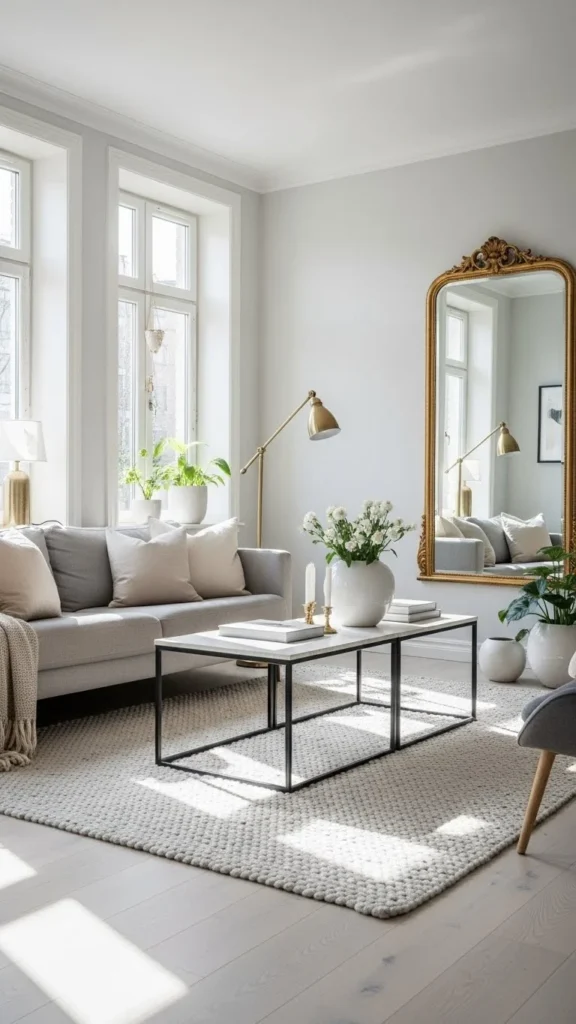
Let’s explore how to combine metal finishes confidently and stylishly.
Start With One Dominant Metal as Your Base
Before layering different metals, choose one metal finish that will lead the design. This creates the foundation for everything else.
Great base-metal choices:
- Matte black
- Brushed nickel
- Brass
- Chrome
- Oil-rubbed bronze
Your main metal should appear in at least 50–60% of the room’s hardware or accents. This establishes visual consistency, making additional metals feel intentional—not random.
Once your base is set, it’s much easier to sprinkle in others.
Choose 1–2 Supporting Metals (But Don’t Overdo It)
After establishing your main metal, introduce one or two complementary metals. Keeping the number small maintains a cohesive aesthetic.
Great metal combinations:
- Black + Gold (modern & warm)
- Brushed Nickel + Chrome (sleek & unified)
- Gold + Bronze (rich & classic)
- Matte Black + Copper (bold & stylish)
- Chrome + Brass (contemporary mixed with classic)
Be intentional: every added metal should serve a purpose, not feel like an accident.
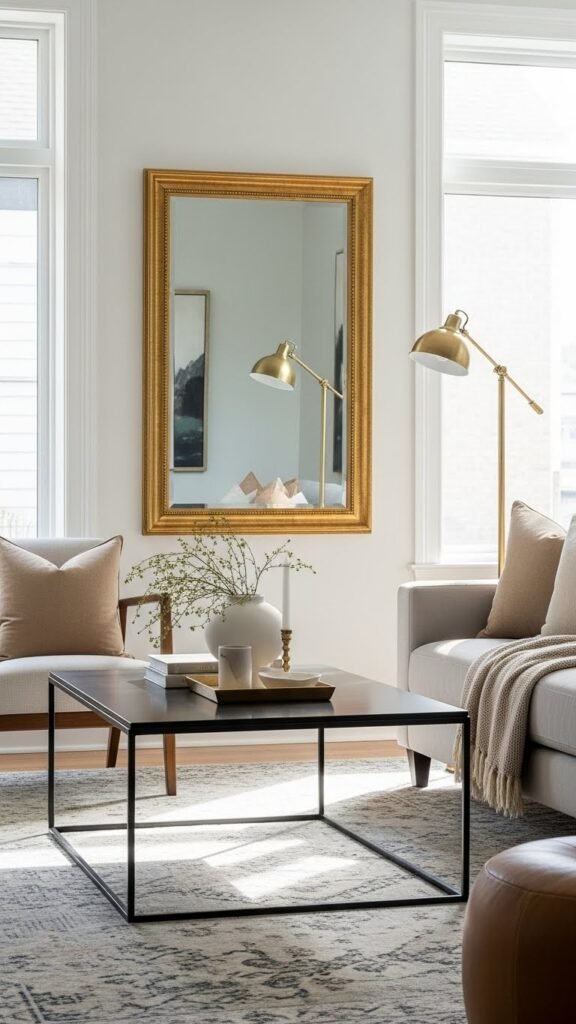
This combination adds depth without feeling chaotic.
Distribute Metals Evenly Throughout the Space
A common mistake is clustering all one metal in one spot and another metal in a completely different area. This makes the room look unbalanced.
Instead, aim for even distribution:
- A brass lamp on one side
- Black picture frames on the other
- Brushed nickel faucet at the center
- Gold-rim décor pieces on a shelf
Think of metals like colors—sprinkle them throughout the room to create harmony.
If metals feel randomly placed, the entire design loses cohesion.
Use the 60–30–10 Rule for Perfect Balance
Designers use this rule not just for colors but also for metal finishes.
Apply it like this:
- 60% main metal
- 30% secondary metal
- 10% accent metal (optional)
This creates a layered but balanced look that feels effortless and polished.
For example:
- Main: matte black
- Secondary: brass
- Accent: chrome
It works in kitchens, bathrooms, bedrooms—anywhere metals appear.
Pay Attention to Tone: Cool vs. Warm Metals
Metal finishes naturally fall into warm and cool categories.
Warm metals:
- Brass
- Gold
- Copper
- Bronze
Cool metals:
- Chrome
- Nickel
- Stainless steel
Warm metals soften spaces and add richness.
Cool metals add clarity and brightness.
Combining warm and cool tones can look stunning—as long as you balance them thoughtfully.
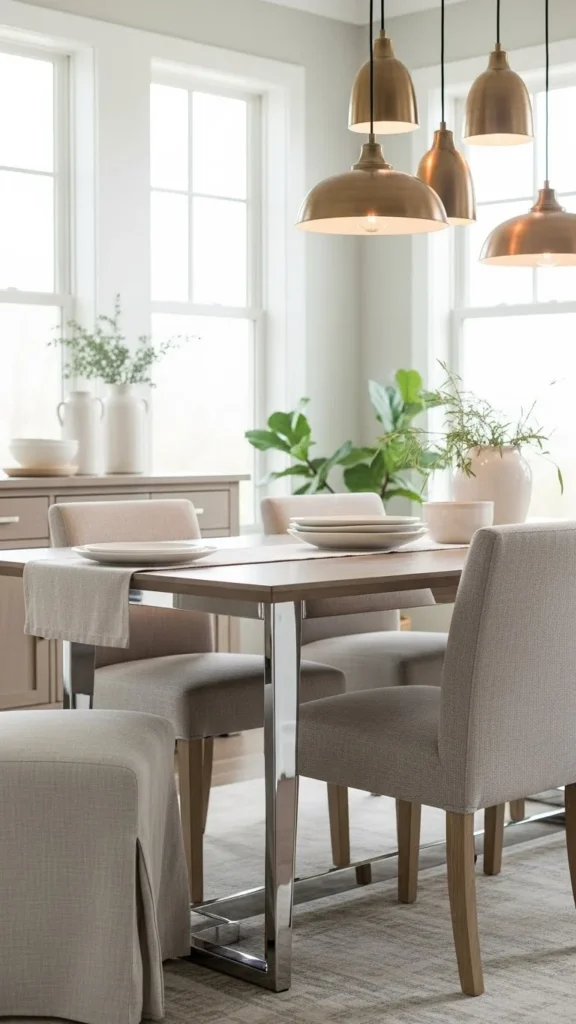
This interplay creates a dynamic, high-end aesthetic.
Use Texture and Finish to Bring Everything Together
Metals don’t just differ by color—they differ by texture and sheen. Mixing textures adds subtle depth while still feeling cohesive.
Mix finishes like:
- Brushed
- Polished
- Matte
- Hammered
- Antiqued
For example:
A matte black faucet pairs beautifully with brushed brass hardware because the finishes feel soft and organic together.
Avoid mixing too many polished finishes—they can overwhelm a room and reflect light harshly.
Anchor Your Metal Choices With Non-Metal Materials
If you’re worried about metals clashing, grounding the space with neutral or natural materials can help.
Great grounding materials:
- Wood
- Stone
- Glass
- Linen
- Neutral paint colors
These materials soften transitions and give the eye a resting place.
Metals look more deliberate when paired with earthy, balanced textures.
Use Statement Pieces to Tie Everything Together
A single showstopping metal element can unite all the other finishes in a room.
Examples:
- A bold gold chandelier
- A black-framed mirror
- A brushed nickel faucet
- A copper pendant light
- A brass floor lamp
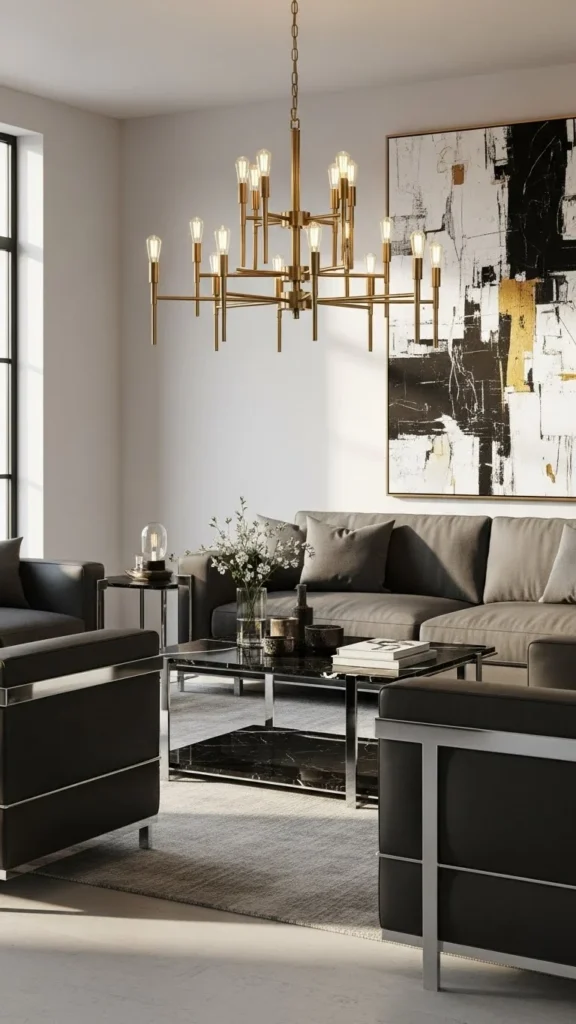
This “hero piece” becomes the star that makes all the other metals feel connected.
Let Fixtures Match, But Decor Mix
If you’re unsure where to start mixing metals, let big fixtures match and start experimenting with décor instead.
Keep cohesive:
- Cabinet hardware
- Faucets
- Door handles
Mix with décor:
- Picture frames
- Candleholders
- Lamps
- Planters
- Vases
This approach gives you freedom without committing permanently.
Final Takeaway
Mixing metals doesn’t have to feel complicated or intimidating. When you choose a dominant finish, sprinkle in complementary tones, balance cool and warm metals, and distribute pieces evenly, your home will look intentionally layered and sophisticated.
Save this guide for later and start mixing metals with confidence like a true designer!
Leave a Reply